White House Portrait Politics: Trump's Moves with Obama and Bush Portraits
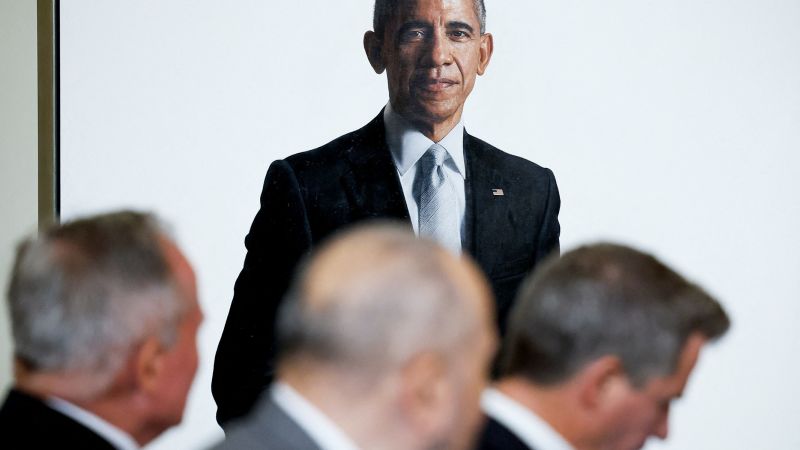
The official portrait of former President Barack Obama, once a prominent feature at the White House entryway, has been relocated to a less visible spot, along with portraits of other recent predecessors with whom President Donald Trump has strained relationships. Trump personally directed staff to move the Obama portrait to the top of the Grand Staircase, out of view from most White House visitors. The portraits of former Presidents George W. Bush and George H. W. Bush have also been moved to the staircase area. Trump is known to be involved in decisions regarding the White House's aesthetics, both major and minor.
A photo obtained by CNN shows the Obama portrait hanging in a corner at the landing of the entrance to the private residence, an area restricted to the first family, Secret Service agents, and a limited number of staff. This positioning ensures that the portrait is not visible to visitors touring the White House. The Obama portrait has been moved before, with a painting of Trump replacing it in the Grand Foyer earlier this year. White House tradition dictates that portraits of recent presidents should be prominently displayed in the entrance of the executive mansion.
Tensions between Trump and Obama have been escalating, with Trump accusing Obama and his administration of treason during the 2016 election. The FBI director, Pamela Bondi, has initiated a grand jury probe into allegations that Obama officials manufactured intelligence about Russia's interference in the election. Similarly, there have been longstanding tensions between Trump and the Bush family, with the elder Bush criticizing Trump and George W. Bush being targeted by Trump's attacks. The portrait maneuvers are seen as Trump's latest slight against perceived political rivals.
The tradition of presidential portraits, funded by the nonprofit White House Historical Association, dates back to the early 1960s under first lady Jacqueline Kennedy. Prior to that, there was no formal policy for presidential portraits, with funding coming from various sources. In the modern era, presidents and first ladies invite predecessors, former staff, and friends and family to unveiling ceremonies for their portraits. The portrait of former President Joe Biden has not yet been completed, leaving a gap in the lineup of recent presidents at the White House.
In conclusion, the relocation of the Obama portrait and the shifting of other presidential portraits at the White House reflect the ongoing tensions between President Trump and his predecessors. The strategic placement of these portraits underscores the political dynamics at play within the White House and the broader political landscape.