Federalization of D.C. Police: Controversy and Chaos in the Capital
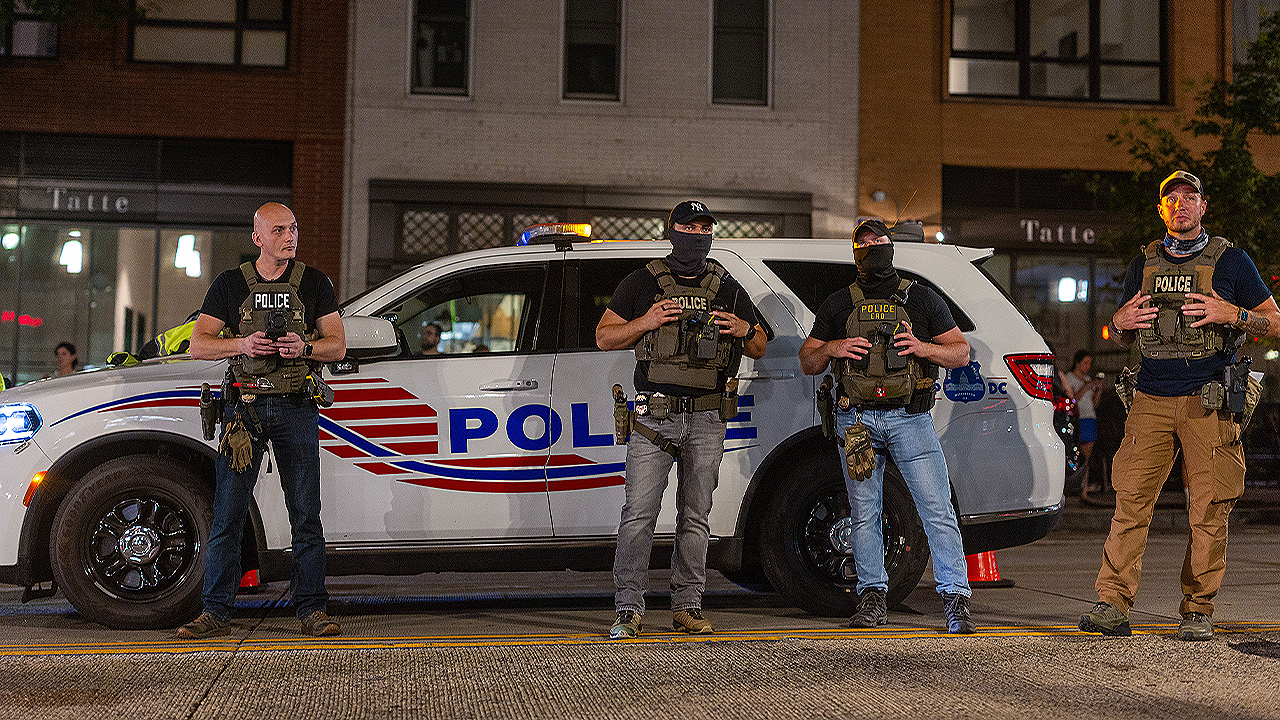
Following President Donald Trump's decision to federalize the police force in Washington, D.C., the city has been thrown into chaos. President Trump announced the seizure of control of the Metropolitan Police Department and the deployment of the National Guard to address crime and homelessness in the capital. Attorney General Pam Bondi was appointed to oversee the city police, with the president indicating readiness to deploy additional military forces if necessary. The declaration of a public safety emergency by Trump has sparked protests across the city, with residents expressing opposition to the federal intervention and criticizing the administration's actions as a distraction from other issues.
Social media posts have warned D.C. residents about immigration checkpoints in the city, with protestors confronting ICE and Homeland Security officers at these checkpoints. The increased presence of ICE in the city has been highlighted on social media, with photos showing officers making arrests and removing drugs and firearms from the streets. One individual, identified as Sean Charles Dunn, faced a federal assault charge for allegedly throwing a sandwich at a U.S. Customs and Border Protection agent. Bondi emphasized that any assault on law enforcement officers would be met with consequences, leading to the termination of Dunn's employment at the Department of Justice and his felony charge.
The federalized D.C. police have implemented an extended curfew in the Navy Yard neighborhood, with curfew hours from 8 p.m. to 11 p.m. for juveniles. The citywide curfew for individuals aged 17 and younger begins at 11 p.m. and lasts until 6 a.m. the following day. Despite opposition from residents, the Trump administration has defended its actions, sharing images of military police patrolling the streets and emphasizing the role of the D.C. National Guard in supporting law enforcement efforts.
President Trump has expressed intentions to extend the federal takeover of D.C. police beyond the initial 30 days and expand the crackdown to other U.S. cities. He highlighted plans for a crime bill focused on D.C. as a model for other cities, emphasizing a vision of a safer and more orderly country. Trump's confidence in the Republican majority in Congress to support his initiatives, or his willingness to act unilaterally in a national emergency, underscores his determination to implement his law enforcement strategies.
In conclusion, the federalization of the police force in Washington, D.C., under President Trump's directive has sparked controversy and protests in the city. The administration's actions, aimed at addressing crime and homelessness, have raised concerns among residents and drawn criticism for the use of military forces in law enforcement. Despite opposition, the Trump administration remains steadfast in its approach, emphasizing the need for enhanced public safety measures and signaling plans for broader implementation of its strategies in other U.S. cities.