Title: "The Impending Threat: The Potential Collapse of the Atlantic Meridional Overturning Circulation (AMOC) and Its Global Consequences
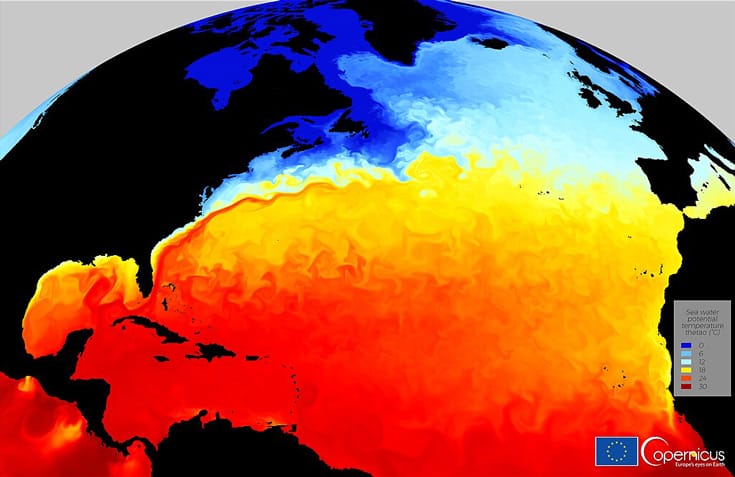
The recent forecast by the Copernicus Marine Environment Monitoring Service on March 8, 2021, revealed the sea surface temperature of the North Atlantic Ocean. While the news of Taylor Swift's engagement made headlines worldwide, a significant update on the potential collapse of the Atlantic Meridional Overturning Circulation (AMOC) went largely unnoticed. The AMOC, often referred to as the Gulf Stream, plays a crucial role in regulating Europe's climate, providing milder winters for countries like Britain, France, and The Netherlands despite their northern latitudes.
The AMOC, originating in the Caribbean, transports an immense amount of heat across the Atlantic, significantly impacting Europe's climate and agricultural productivity. A recent scientific study warned that the collapse of the AMOC is no longer a distant possibility but a likely outcome if greenhouse gas emissions continue unchecked. The collapse could lead to drastic changes in Europe's climate, with colder winters, reduced food production, and population displacement.
Scientists emphasized the urgent need for global efforts to reduce emissions to mitigate the risk of AMOC collapse. The potential consequences extend beyond Europe, affecting agriculture in Africa and other regions by disrupting rainfall patterns. Despite the gravity of the situation, the lack of attention to these warnings underscores the challenges in raising awareness about the climate crisis and the need for immediate action.
To address these issues, workshops and initiatives like the Solutions Journalism Network aim to enhance climate reporting and engage journalists in covering climate-related stories effectively. By highlighting the impact of climate change on different regions and populations, there is an opportunity to mobilize action and drive meaningful change. The future of climate reporting relies on collaborative efforts to amplify the voices of those affected and advocate for sustainable solutions.
In conclusion, the urgency of addressing climate change and its potential consequences, such as the collapse of the AMOC, requires a collective response from governments, industries, and individuals worldwide. By prioritizing emissions reduction and sustainable practices, we can work towards safeguarding our planet and ensuring a more resilient future for all.