Exploring the Impact of Charlie Kirk's Death on Church Attendance and Religious Revival
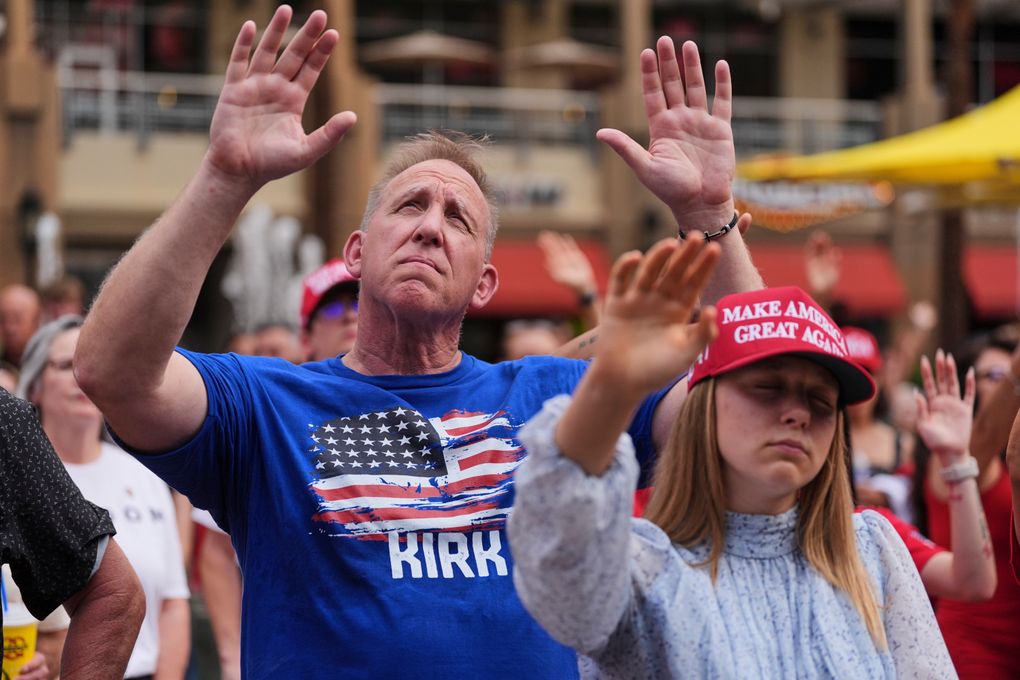
Following the tragic death of conservative activist Charlie Kirk, there has been a surge of interest in evangelical and Catholic churches, with some suggesting that his assassination could spark a religious revival, particularly among young conservatives. The memorial service for Kirk resembled a megachurch gathering, with high-profile figures praising his impact on both politics and spirituality. While some believe that Kirk's death could lead to a lasting increase in church attendance, historical trends show that such surges are often short-lived.
Political scientist Ryan Burge pointed out that previous civic traumas like the 9/11 attacks did not result in sustained increases in church attendance. Despite reports of new faces in conservative Christian congregations following Kirk's death, it remains to be seen whether this trend will continue in the long term. Some church leaders have reported higher attendance numbers in the wake of Kirk's passing, attributing it to a renewed focus on faith and spirituality.
The possibility of a religious revival post-Kirk's death has been highlighted in various media, with individuals sharing their experiences of returning to church after years of absence. The message to honor Kirk by reconnecting with faith and spirituality has resonated with many, leading to a potential increase in church engagement. While Kirk's influence extended primarily to Protestant evangelical circles, his admirers included prominent Catholic clergy who praised his missionary zeal and commitment to truth.
Despite the speculation about a potential religious revival, some experts caution that any uptick in church attendance may not be sustainable in the long run. The response to Kirk's death could reshape American Christianity by aligning it more closely with conservative political ideologies. While the impact of Kirk's legacy on church attendance remains to be seen, it has sparked conversations about the evolving nature of faith and politics in the U.S.
In conclusion, the aftermath of Charlie Kirk's death has sparked discussions about the intersection of faith, politics, and youth engagement in evangelical and Catholic communities. While some see his passing as a catalyst for a religious revival, others question the lasting impact of this surge in church attendance. As churches welcome new faces and seek to build connections with returning members, the legacy of Kirk's message continues to shape conversations about spirituality and political conservatism in American society.