Media Bias in Government Shutdown Coverage: Partisan Narratives and Public Perception
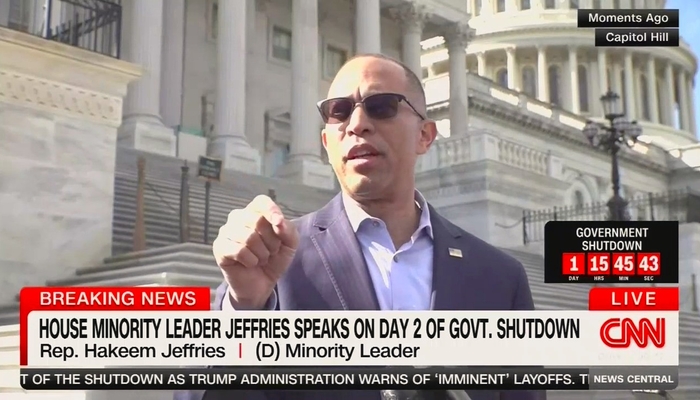
The media tends to portray government shutdowns as a battle between Democrats, who are seen as the Party of Government, and Republicans, who are often labeled as the Haters of Government. The blame for shutdowns is usually pinned on Republicans, with the press emphasizing their role in the situation. During past shutdowns, the media has consistently pointed fingers at Republicans, even when both parties were involved. The bias in media coverage is evident in how shutdowns are framed, with Republicans often portrayed in a negative light.
In recent shutdowns, such as those in 2013 and 2019, the media's coverage has been critical of Republicans, with labels like "suicide caucus" and "economic terrorism" being used to describe their actions. The media's bias is further highlighted by instances where reporters fact-check Republican claims but fail to do the same for Democrats. The media's role in shaping public perception during shutdowns is significant, as they often influence how the blame is assigned and the narrative that is presented to the public.
The media's focus on partisan politics and sensationalized rhetoric during shutdowns detracts from the actual issues at hand, such as federal spending and the national debt. Instead of delving into the complexities of these issues, the media tends to simplify the narrative and frame it as a political showdown. This approach not only misleads the public but also perpetuates a cycle of partisan bickering and blame-shifting.
Overall, the media's bias in covering government shutdowns has a significant impact on public perception and political discourse. By framing the narrative in a way that favors one party over the other, the media perpetuates a divisive and polarized political environment. It is essential for the media to provide balanced and objective coverage of shutdowns to ensure that the public is well-informed and able to make informed decisions about the issues at hand.