Key Players and Complex Dynamics: Iraq's Parliamentary Election Preview
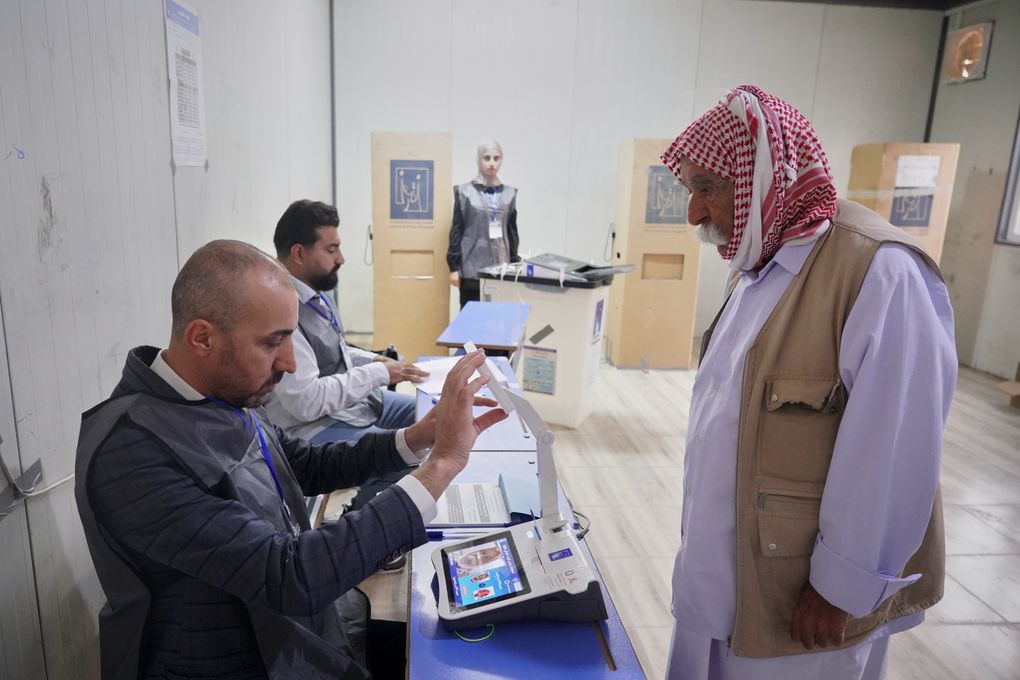
In Iraq, early voting for the parliamentary election took place, with security forces and displaced people, including Yazidis, casting their ballots. The election will determine if Prime Minister Mohammed Shia al-Sudani will get a second term. There are concerns about potential conflicts between Israel and Iran, as well as Iraq's relationships with Tehran and Washington. Approximately 1.3 million security personnel and 26,000 displaced individuals are eligible to vote, with 7,744 candidates running for office. Election day is scheduled for Tuesday.
Yazidis, who have faced persecution and displacement due to attacks by the Islamic State group, voted at a camp near Dohuk in the Kurdish region. Many Yazidis have been unable to return home due to political disputes and lack of infrastructure. Despite the challenges, voters turned up at polling stations, with monitors from various parties present.
Following the defeat of IS, Yazidis have slowly started returning to their homes in Sinjar, but the area remains in disarray. Political disputes between Baghdad and Kurdish authorities have further complicated the situation. Displaced Yazidis expressed skepticism about the potential for change with new leaders and emphasized the need for support in rebuilding their communities.
In Baghdad, Iraqi security forces, including members of the Popular Mobilization Forces (PMF), a coalition of Iran-backed militias, also participated in early voting. The fate of the PMF will be a key issue for the next parliament, given tensions between Baghdad and Washington over the presence of these militias. Some voters expressed support for lists that defend the PMF, highlighting the complex political landscape in Iraq.
The parliamentary election in Iraq is significant, with a diverse range of candidates vying for seats. The participation of security forces, displaced individuals, and minority groups like the Yazidis underscores the importance of this democratic process. The outcome of the election will shape the country's future and its relationships with regional and international actors.