The Complexities of Justice: A Review of James Vanderbilt's 'Nuremberg' Starring Russell Crowe and Rami Malek
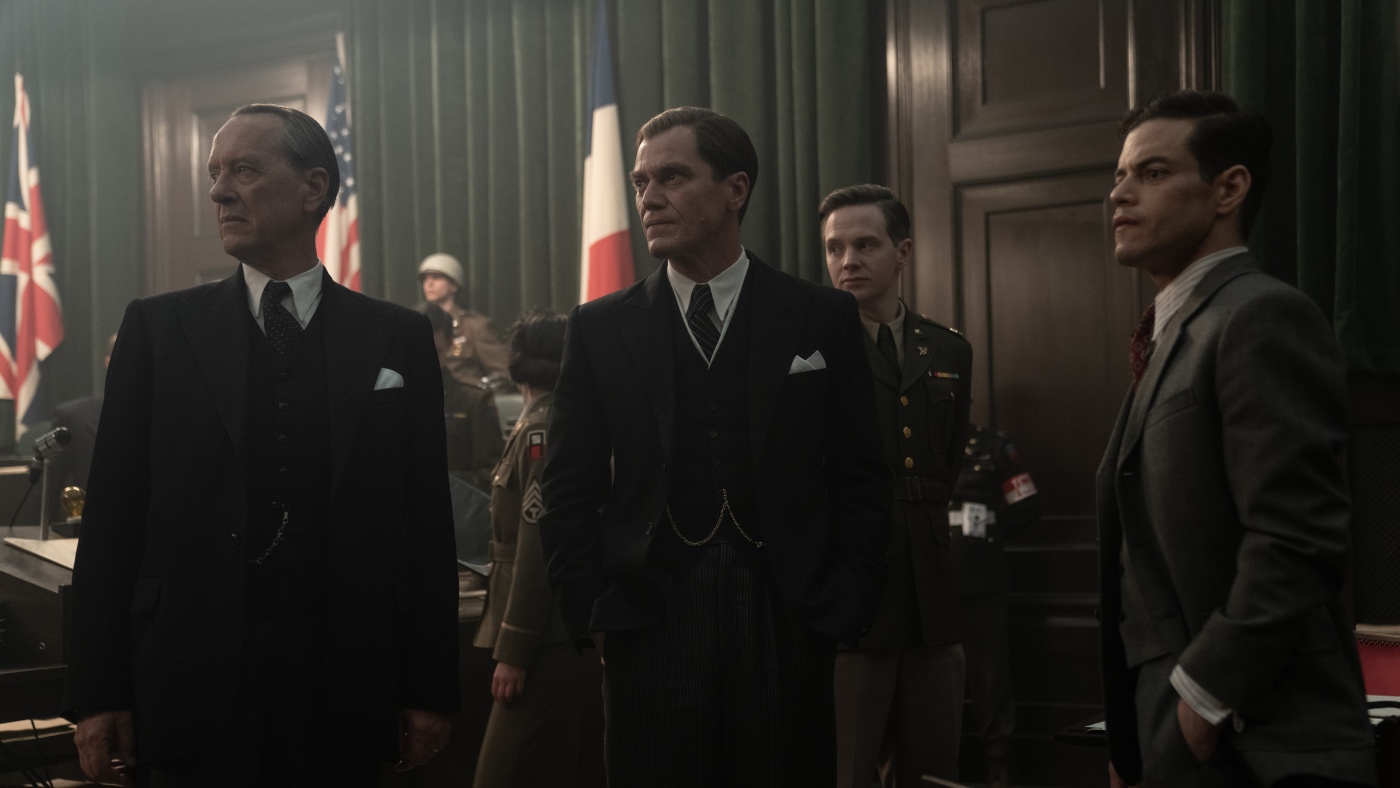
Russell Crowe and Rami Malek star in James Vanderbilt's latest film, "Nuremberg," which delves into the historical clash between psychiatrist Douglas Kelley and Nazi leader Hermann Goering during the Nuremberg trials. The movie, released to coincide with the 80th anniversary of the trials, follows Kelley's mission to assess the defendants' mental fitness for trial and his complex relationship with Goering.
Running just under two and a half hours, the film's pacing and tone are uneven, with a slow start leading to attempts to engage the audience through contrived moments and voiceovers. While some elements work well, such as the magician's sleight of hand motif, others fall flat, like the slapstick portrayal of Nazi leader Rudolf Hess. The stellar cast, including Michael Shannon and Richard E. Grant, delivers riveting performances, with Crowe and Malek showcasing their chemistry on screen.
Despite the strong performances, the film struggles with labored setups, unresolved storylines, and a rushed epilogue that glosses over Kelley's post-trial life. The thematic weight of the film, exploring the nature of evil and mass psychology, adds depth but also contributes to its stylistic inconsistencies. The courtroom scenes, particularly the screening of Holocaust footage, are impactful, highlighting the horrors of the crimes committed.
As the film builds towards a climactic showdown between Goering and Kelley, it falls short in portraying Goering's complexity, reducing him to a caricature easily dismantled on the stand. While "Nuremberg" follows a long tradition of films about Nazi war crimes trials, it grapples with contemporary issues like social media psychology and diagnostic terminology. The film challenges the notion of evil as extraordinary, instead presenting the perpetrators as ordinary men capable of unspeakable atrocities.
In conclusion, "Nuremberg" offers a thought-provoking exploration of the Nuremberg trials and the individuals involved, raising questions about accountability, evil, and the banality of atrocity. Despite its flaws, the film's strong performances and thematic depth make it a compelling addition to the cinematic portrayal of historical events.