From Hollywood to the Skies: The Fascinating History of Aviation in Los Angeles
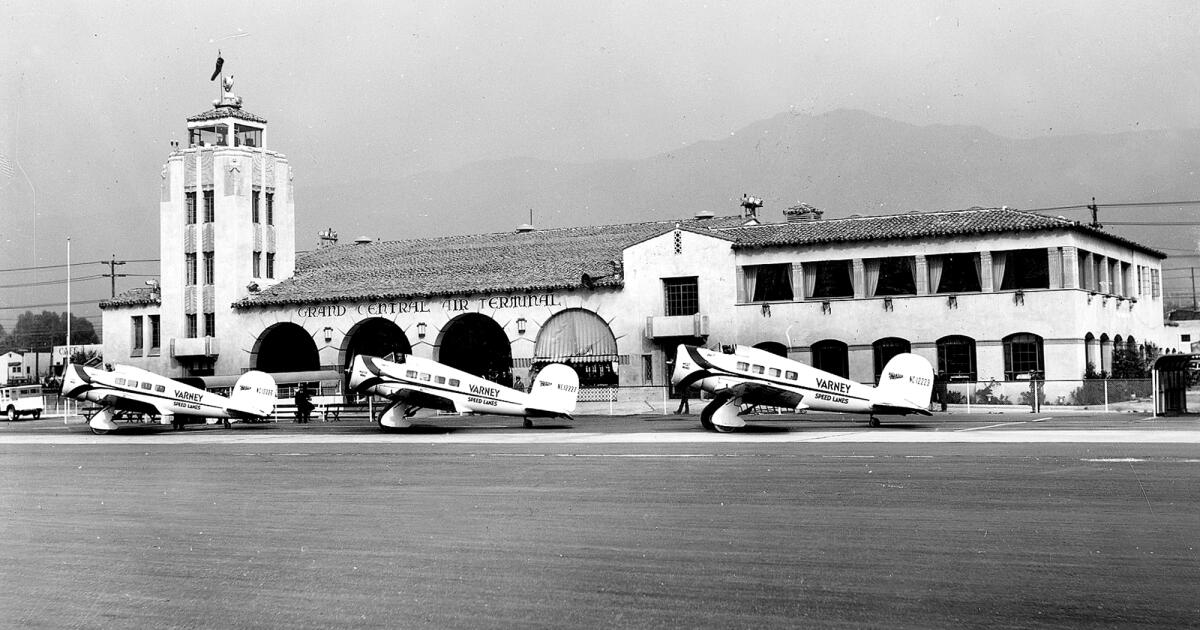
The iconic song "On the Good Ship Lollipop" is a well-known cultural reference, but its origins in the 1934 film "Bright Eyes" might surprise some. The song was originally sung by Shirley Temple's character as she taxied around the Grand Central Air Terminal in Glendale, one of Los Angeles' earliest commercial airports. Today, this historic building has been restored by Disney and is part of the Grand Central Creative Campus, serving as office and event spaces. The terminal has a rich history, hosting record-breaking flights by aviators like Charles Lindbergh and Laura Ingalls, as well as being a filming location for early Hollywood movies.
In the early 20th century, Los Angeles was a hub for both the aviation and film industries, with the city's favorable weather and open spaces attracting pioneers in flight and filmmaking. The Grand Central Air Terminal, completed in 1929, was a significant landmark in the development of air travel, hosting celebrities, industry leaders, and serving as a backdrop for numerous films. Hollywood's deep connection to aviation is evident in the stories of early aviators turned movie stars, like Reginald Denny, and the tragic accidents that shaped the industry's safety practices.
The intersection of Hollywood and aviation in Los Angeles is a fascinating chapter in the city's history, with early airfields owned by film industry figures like Cecil B. DeMille and Sydney Chaplin. These airfields played a crucial role in the development of commercial aviation, with DeMille's Mercury Aviation Co. becoming the world's first airline with scheduled flights. The allure of flight and the glamour of Hollywood intersected in the early days of cinema, inspiring films that celebrated the miracle of flight and encouraged audiences to embrace air travel.
As Hollywood and aviation continued to evolve, their intertwined histories produced innovative collaborations, like the use of drones for filming dangerous aerial stunts. The glamour of air travel captured the imagination of stars and audiences alike, leading to iconic images of celebrities disembarking from planes and posing in flight-inspired fashion. Hollywood's influence extended to airport design during World War II, with studios assisting in camouflaging Lockheed Airport to protect it from potential attacks.
Los Angeles International Airport (LAX) and Hollywood Burbank Airport have their own storied pasts, with LAX becoming a prominent filming location and cultural reference in various media. The legacy of Hollywood's relationship with aviation lives on in the stories of early aviators, daring stunt pilots, and the enduring glamour of air travel. As we reflect on this history during the holiday season, we can appreciate the role Hollywood played in shaping the air travel industry and inspiring generations of travelers and filmmakers alike.