Ukraine's President Unveils New Plan to End Russian Invasion: Negotiations and Challenges Ahead
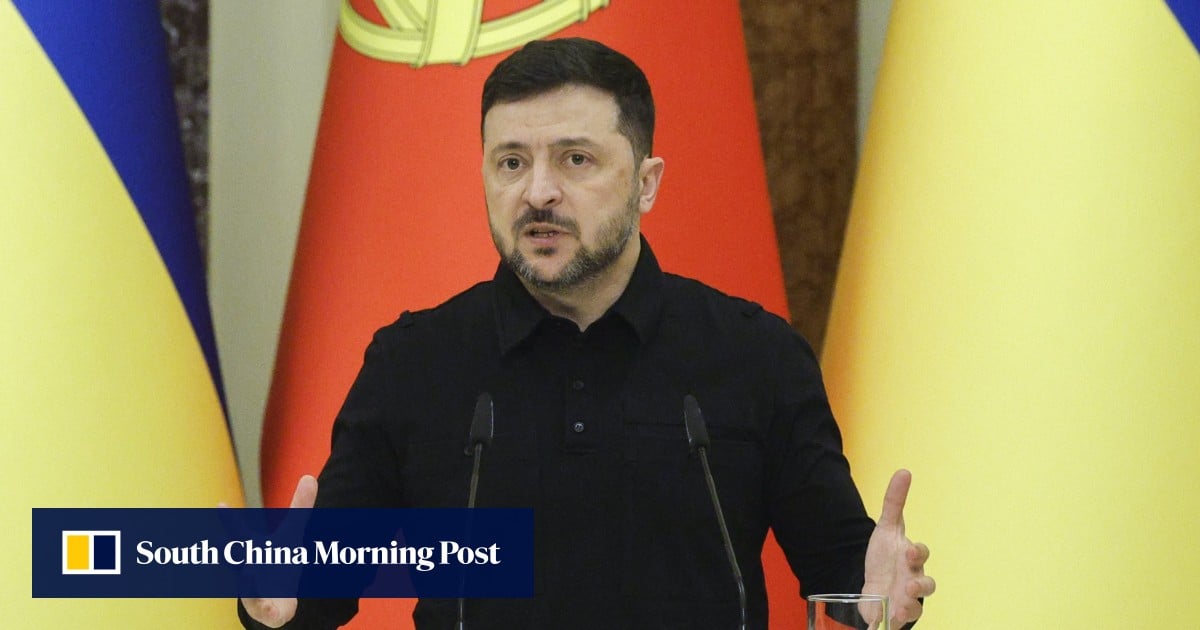
Ukraine's President, Volodymyr Zelensky, announced that a new plan has been developed to end the Russian invasion, which involves freezing the front line while allowing for Ukrainian withdrawals and the establishment of demilitarized zones. The plan, consisting of 20 points, reflects a joint Ukrainian-American position and is currently under review by Moscow. Despite some unresolved issues and disagreements with certain points, Zelensky expressed optimism about the progress made in the negotiations.
The negotiations have moved closer to finalizing the documents, with the plan deviating from the original 28-point US proposal that aligned more closely with Russia's demands. However, Russia, led by President Vladimir Putin, continues to push for maximalist demands, including Ukraine ceding land in eastern Donetsk, a proposition that Ukraine vehemently opposes due to security concerns.
The current proposal involves Russia potentially withdrawing troops from certain regions while expecting Ukraine to relinquish control of areas in Donetsk. The US advocates for designating this region as a "free economic" or "demilitarized" zone to avoid a complete withdrawal. The issue of land surrender poses a challenge for Kyiv as it would require violating Ukrainian law and holding a referendum.
Putin's willingness to accept the proposals remains uncertain, as he has emphasized achieving Russia's war aims through negotiations or military means. The latest plan no longer includes a requirement for Kyiv to renounce its bid to join NATO, a demand that has been dropped. Additionally, discussions are ongoing regarding the status of the Zaporizhzhia nuclear power plant, with the US proposing joint ownership among all parties involved.
Zelensky expressed reservations about the idea of joint commercial activity with Russia at the Zaporizhzhia plant, given the history of conflict. He suggested splitting the plant's output between Ukraine and the US, with the possibility of the US deciding whether to share any portion with Russia. The negotiations continue to face challenges, but progress has been made in aligning positions and moving towards a resolution.