USC's Alamo Bowl Loss: Defensive Struggles, Missed Opportunities, and Future Challenges
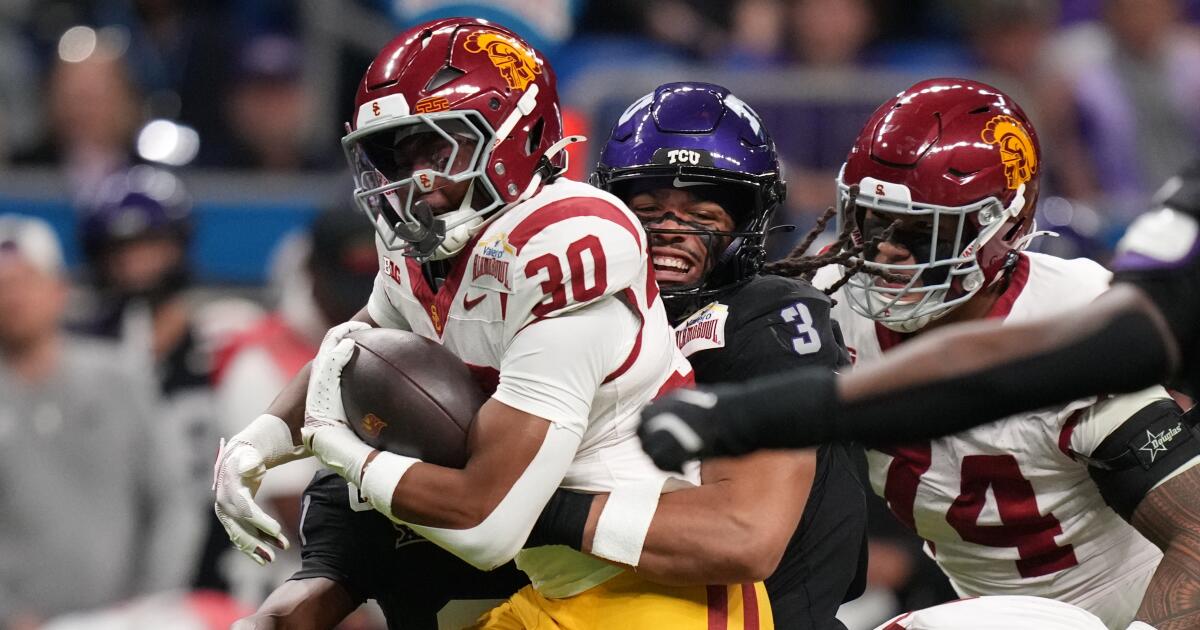
USC faced a tough 30-27 overtime loss against Texas Christian in the Alamo Bowl, highlighting the team's missed opportunities and defensive struggles throughout the game. Despite moments of brilliance from players like Tanook Hines and King Miller, USC couldn't maintain its lead in the final minutes, ultimately falling short in overtime with a field goal that sealed their defeat. The game exposed USC's defensive vulnerabilities and raised questions about the team's future direction, especially after the departure of defensive coordinator D'Anton Lynn.
The Trojans had multiple chances to secure the win but faltered in critical moments, mirroring their struggles in previous losses during the season. With key players missing due to injuries and other reasons, USC faced an uphill battle on both sides of the ball. The absence of defensive coordinator D'Anton Lynn added to the team's challenges, forcing defensive line coach Eric Henderson to step up in an unexpected role. Despite a strong start defensively, USC's momentum waned as TCU capitalized on mistakes and mounted successful drives.
Offensively, USC showed flashes of potential with standout performances from Tanook Hines and King Miller, but quarterback Jayden Maiava's two interceptions proved costly. The team's inability to convert promising drives into touchdowns and reliance on field goals left them trailing at halftime. USC's defense struggled to contain TCU's offense, especially in the fourth quarter, allowing crucial yards and points that ultimately led to the game's overtime conclusion.
As the Trojans head into the offseason, they face uncertainties about their defensive strategy, player roster, and coaching staff. The Alamo Bowl loss served as a reminder of the team's shortcomings and the need for improvement in key areas. Despite individual standout performances, USC must address its overall consistency and execution to compete at a higher level in the future.