The Monroe Doctrine: From Historic Address to Modern Foreign Policy
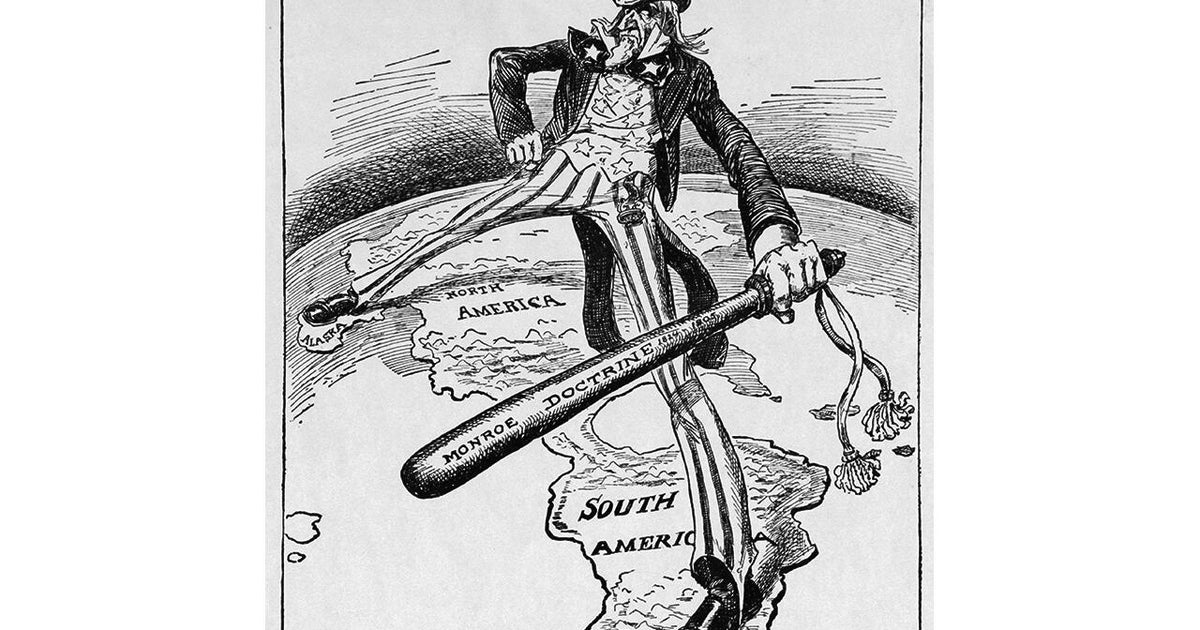
The Monroe Doctrine, a historic address to Congress by President James Monroe in 1823, has resurfaced in the spotlight recently. Historian Jay Sexton, who authored a book on the doctrine, has seen a surge in interest in the topic. Monroe's message was a warning to European powers to stay out of the Americas, setting the stage for U.S. actions in Latin America for years to come.
Over the years, the Monroe Doctrine evolved from a presidential statement to a doctrine used to justify U.S. interventions in Latin America. President James K. Polk invoked it during the war with Mexico in 1846, and President Teddy Roosevelt expanded on it with his own corollary in 1904. Roosevelt saw the need for preemptive action in the region to prevent European intervention.
The U.S. Marines became involved in Latin American and Caribbean countries in the early 20th century, aiming to stabilize the region and protect U.S. business interests. These interventions, known as the Banana Wars, led to significant casualties and became unpopular over time. The U.S. eventually withdrew from Haiti in 1934, marking the end of this era.
After World War II, the Monroe Doctrine faded into the background until it resurfaced during the Cuban Missile Crisis in 1962. President John F. Kennedy's response to the crisis highlighted the doctrine's significance. Recently, President Trump referenced the Monroe Doctrine in relation to the situation in Venezuela, emphasizing its renewed importance in U.S. foreign policy.
The Monroe Doctrine, with its historical significance and impact on U.S. foreign policy in Latin America, continues to be a topic of discussion and debate in contemporary times.