Trump's First Year in Office: A Polarizing Presidency Examined
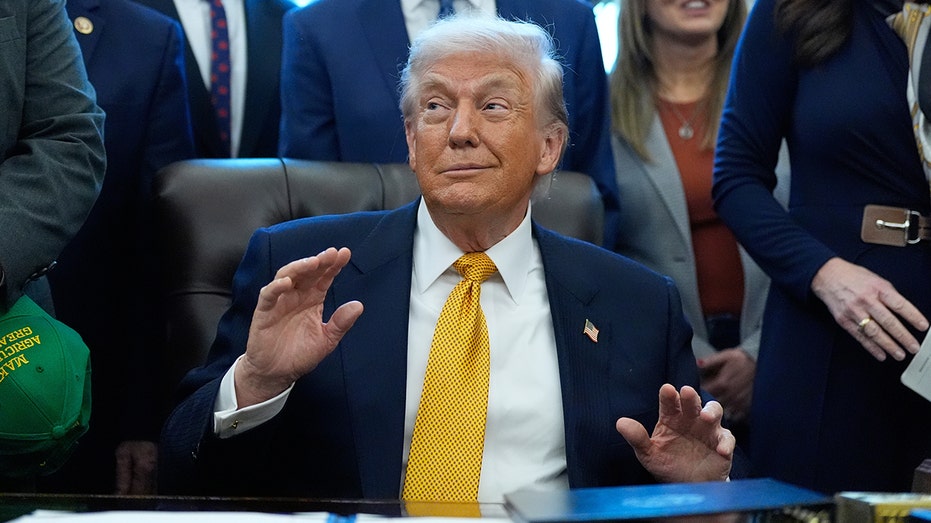
One year has passed since Donald Trump returned to the Oval Office, marking a year of bold executive orders, controversial foreign policy decisions, and a governing style that has remained unapologetically firm. Throughout this time, the prevailing narrative has been Trump's unpopularity, with approval ratings in the low 40s and disapproval in the mid-50s, as indicated by various polls.
However, it may be worth considering a different perspective on Trump's first year in office. Rather than viewing his performance as a failure, what if the polls are reflecting his delivery on campaign promises and the resulting division within the country? Unlike most presidents who tend to moderate their approach after taking office, Trump has maintained his campaign persona, challenging the nation to react to his unyielding governance.
Trump's actions have aligned with his promises, such as cracking down on immigration, prioritizing America's interests, and prioritizing decisive action over consensus. While many may disagree with his decisions, it is undeniable that he has stayed true to his campaign pledges, which explains the stability in his polling numbers after one year in office.
Despite the headlines dominated by Trump's approval ratings hovering around 41% to 42% and disapproval in the mid-50s, a significant statistic from a Wall Street Journal poll reveals that 92% of voters who supported Trump in 2024 still approve of his performance. This unwavering support indicates alignment rather than erosion, as Trump has managed to retain his core base of supporters.
The current political climate reflects a shift in how voters respond to Trump's actions. Rather than being swayed by his performance, voters seem to react based on their existing beliefs and values. Supporters perceive his actions as delivery on promises, while opponents see them as confirmation of their criticisms. This polarization is reflected in the polls, which record divergent reactions to the same events.
Trump's presidency has not led to significant fluctuations in approval ratings, scandals have not weakened his support, and victories have not expanded it. Instead, the country appears to be sorting itself into opposing camps in response to Trump's unwavering governance. This stability without consensus is unsettling for both critics and supporters, who seek clear signals of either collapse or dominance in the polls.
Trump's presidency has been defined by his consistency in disrupting the political status quo. He did not campaign as a unifier, reformer, or outsider who would later moderate his approach. Instead, he has governed as a disruptor, challenging the established norms and provoking reactions from a deeply divided nation.
As the one-year anniversary of Trump's presidency approaches, his approval ratings serve as a reflection of the country's discomfort with the consequences of their vote. Trump's unwavering commitment to his campaign promises has delivered exactly what he pledged, prompting a polarized response from the American public. In an era of political flip-flops, Trump's steadfastness has unsettled many, highlighting the divide in the nation's response to his governance.
Ultimately, Trump's first year in office has not been judged solely on his performance but on the discomfort felt by a nation grappling with the consequences of electing a disruptor. The polls are not evaluating his actions; they are measuring America's response to receiving what it voted for, for better or for worse.