Exploring the Heliosphere: NASA's IMAP Mission to Study Solar Activity and Space Weather
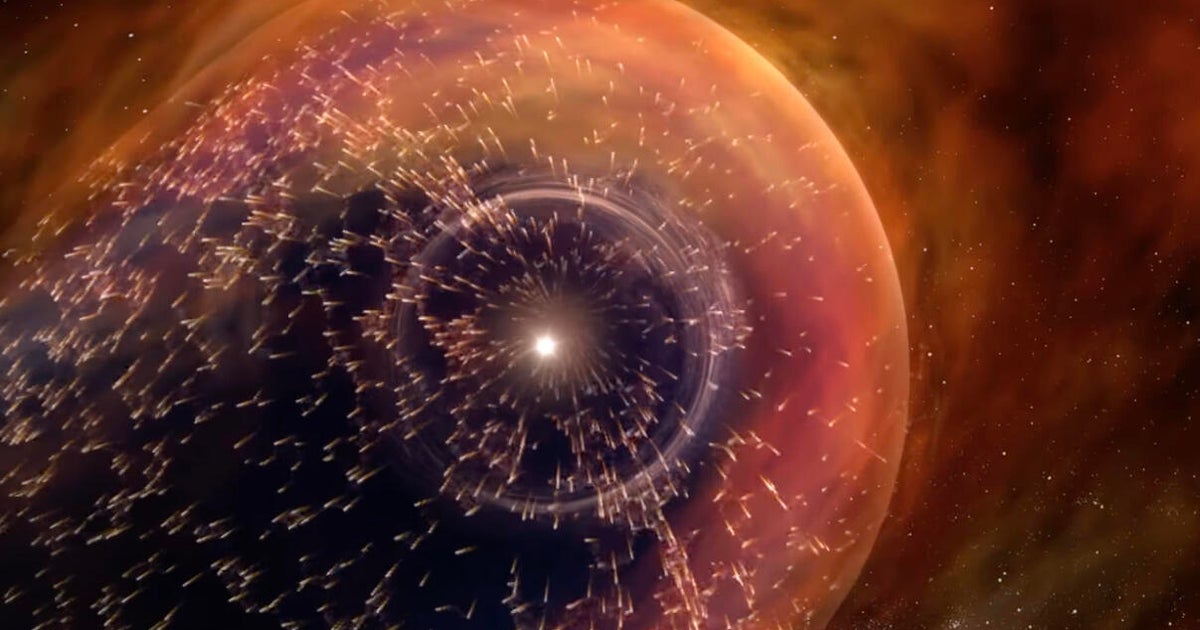
NASA has launched the Interstellar Mapping and Acceleration Probe (IMAP) to explore the heliosphere, a protective bubble surrounding the solar system. The probe will spend two years studying high-energy particles from the sun, magnetic fields between planets, and dust from collapsed stars in the galaxy. This mission aims to understand the sun's activity and its interaction with the surrounding galactic environment.
By mapping the heliosphere, scientists hope to answer fundamental questions about the universe. The mission will focus on the energization of charged particles from the sun and the solar wind's interaction with interstellar space. Additionally, it will provide insights into space weather patterns, such as solar flares, storms, and coronal mass ejections, which can impact spacecraft and astronauts. NASA plans to use IMAP data to issue advanced warnings and alerts for potential adverse space weather effects.
The National Oceanic and Atmospheric Administration's Space Weather Prediction Center will utilize data from the IMAP mission to monitor space weather conditions. Recent updates warned of a strong solar flare that could affect communication on Earth for a few hours. This collaboration between NASA and NOAA aims to enhance forecasting capabilities and protect spacecraft and astronauts from space weather events.
NASA's IMAP mission comes at a time when solar activity is increasing after a prolonged period of low activity. Recent research has shown a rise in solar activity over the past 16 years, which could impact space weather and technology on Earth. The IMAP probe will play a crucial role in monitoring these changes and providing valuable data for understanding the sun's influence on the solar system and beyond.