Dr. Julian Bashir's Evolution: From Flirtatious Doctor to Complex Character on 'Star Trek: Deep Space Nine
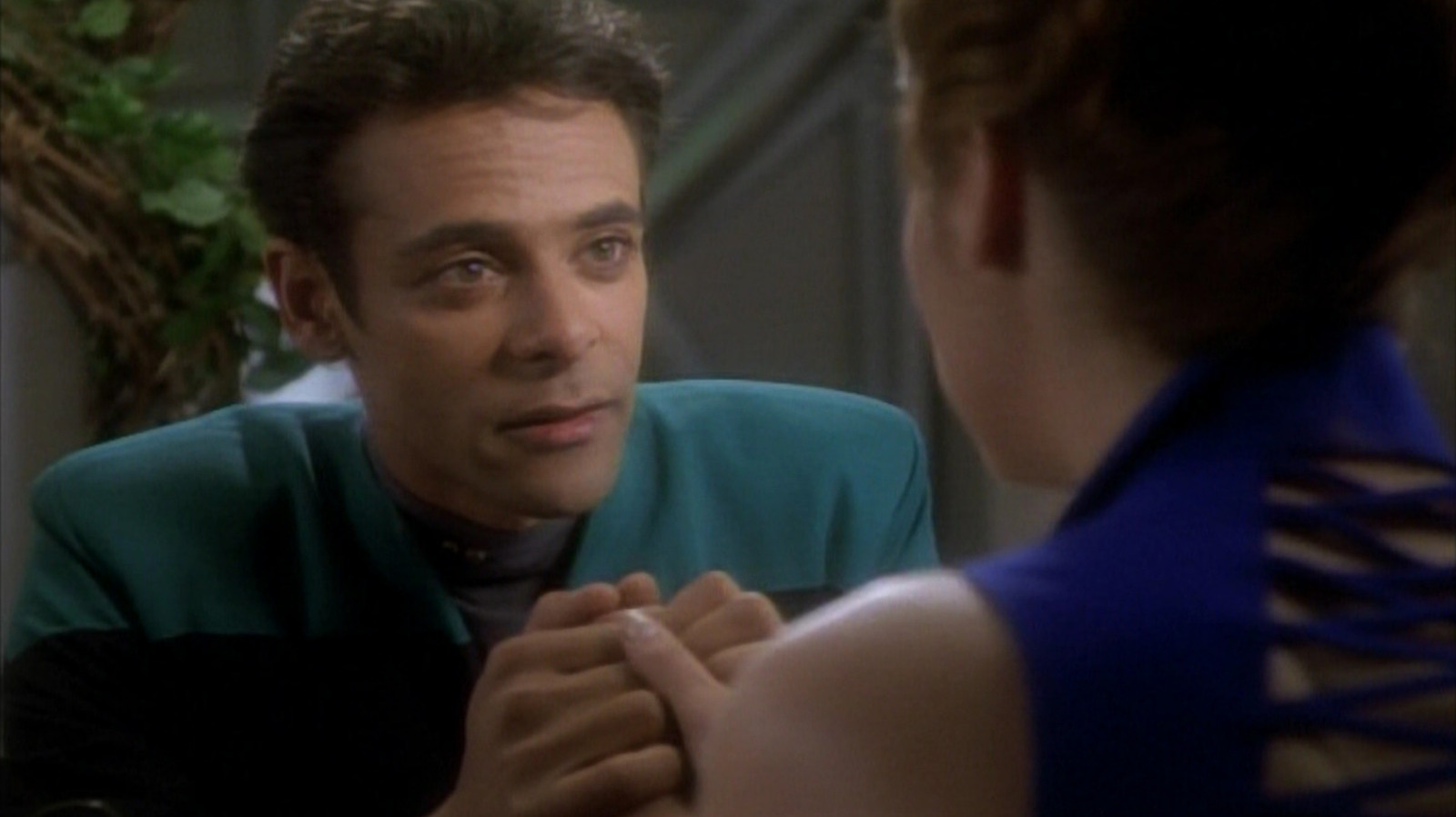
In the early episodes of "Star Trek: Deep Space Nine," Dr. Julian Bashir was portrayed as a flirtatious character who often used odd pick-up lines. Despite his initial insufferable behavior, the character evolved over time, breaking away from the franchise's tendency to keep young characters immature. In one memorable scene from the first season, Bashir impresses a Bajoran woman with a story from his Starfleet Medical School days, where he intentionally answered a question incorrectly to avoid the pressure of being the best in his class.
The story of Bashir confusing a preganglionic fiber for a postganglionic nerve was pointed out as a medical inaccuracy by Robert Hewitt Wolfe's wife, who was studying to be a veterinarian. This error led to the creation of an episode, "Distant Voices," where Bashir's subconscious reveals that he deliberately answered the question wrong to avoid high expectations. The episode delves into Bashir's fear of living up to a standard of excellence.
The episode "Emissary" introduced the preganglionic fiber/postganglionic nerve mix-up, which was initially suggested by technical consultants Rich Sternbach and Michael Okuda. The use of placeholders like "MEDTECH" in scripts allowed technical experts to fill in medical terminology later. Despite the error in medical accuracy, the storyline surrounding Bashir's deliberate mistake added depth to his character and showcased his internal struggles.
In conclusion, the evolution of Dr. Julian Bashir's character on "Star Trek: Deep Space Nine" from a flirtatious young doctor to a more mature and complex individual reflects the show's commitment to character development. The exploration of his insecurities and fears through medical inaccuracies adds layers to his persona, making him a more relatable and multidimensional character in the Star Trek universe.