Botany Beats: Using Taylor Swift's Music Videos to Enhance Plant Learning at UMH
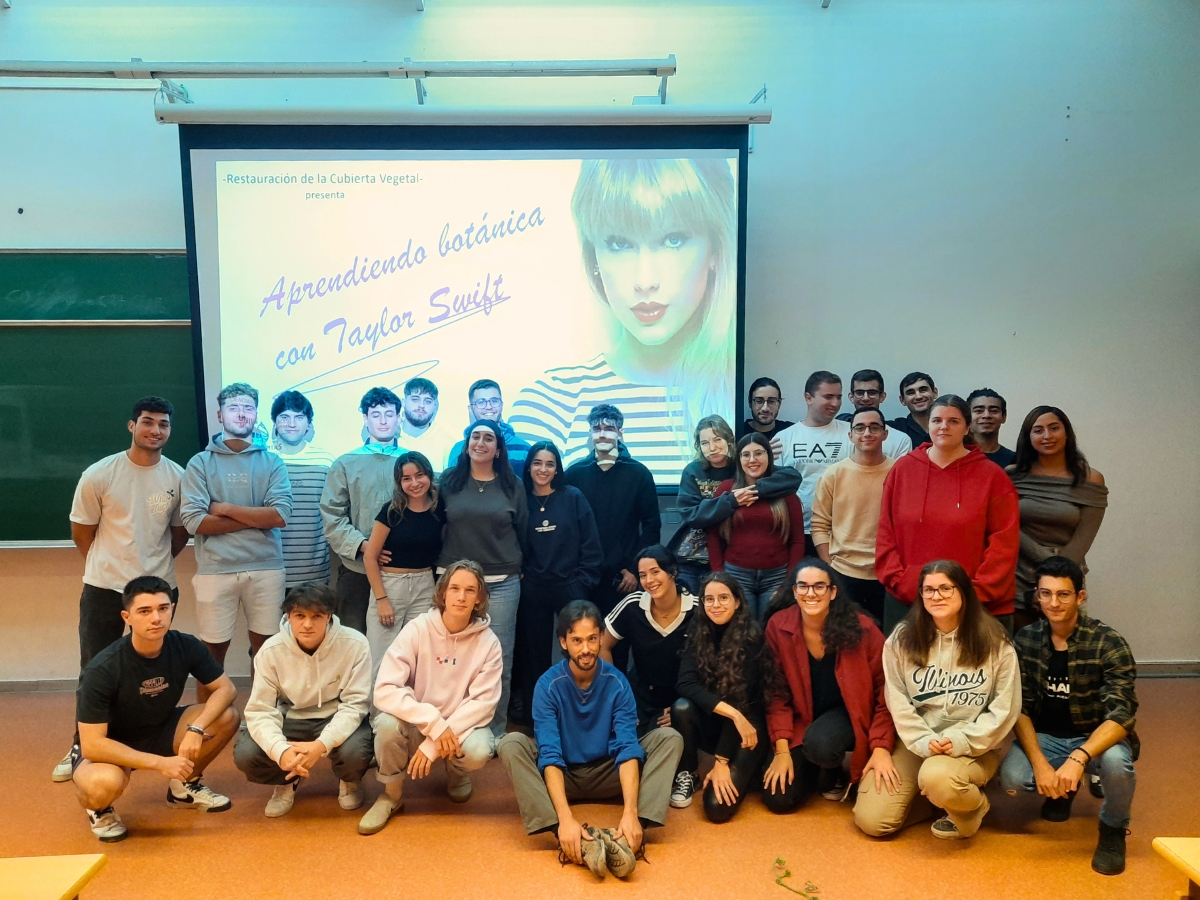
La Miguel Hernández University of Elche (UMH) has conducted a study showing that Taylor Swift's music videos can be a valuable tool for enhancing Botany learning. The project, carried out in the Environmental Science program, utilized landscapes from Swift's videos to engage students and reinforce complex Botany concepts. Led by Professor Joacin Moreno Compañ, the project integrated popular culture resources into a student-centered teaching approach.
During the 2024-2025 academic year, the experiment took place in the Restoration of the Vegetation Cover course at the Faculty of Experimental Sciences. The sessions began with a questionnaire related to a specific video clip to assess students' prior knowledge. The instructors then presented the theoretical content associated with the video and evaluated the students' learning progress. The overall effectiveness of the methodology was measured through a final test.
The music videos provided valuable scenarios for studying various plant groups and ecological adaptations. For example, "Cardigan" (2020) focused on mosses and ferns in humid environments, while "Out of the Woods" (2015) addressed conifers and gymnosperms in temperate forests. "Willow" (2020) explained angiosperms and riparian vegetation, and "Wildest Dreams" (2015) analyzed biomes like the savanna and grasses' strategies in drought conditions.
The results showed an improvement in students' understanding of major plant groups, fruit types, inflorescences, riparian vegetation, and different biomes after the sessions. The majority of students expressed satisfaction with the use of music videos to activate prior knowledge and found the methodology helpful for learning new content. Professor Moreno highlighted the power of music videos as educational tools, emphasizing their ability to combine image, narrative, and emotion effectively.
The project not only enhances Botany education but also addresses "botanical blindness," the challenge of recognizing and appreciating plants in everyday surroundings. By integrating cultural references into science education, the initiative aims to make the plant world more visible and promote environmental awareness among students. This innovative approach aligns with UMH's efforts to provide participatory education that connects with students' cultural reality and fosters meaningful and lasting knowledge.