Unboxing the Truth: Exploring Surveillance, Consumerism, and Identity in Russell Goldman's "Sender
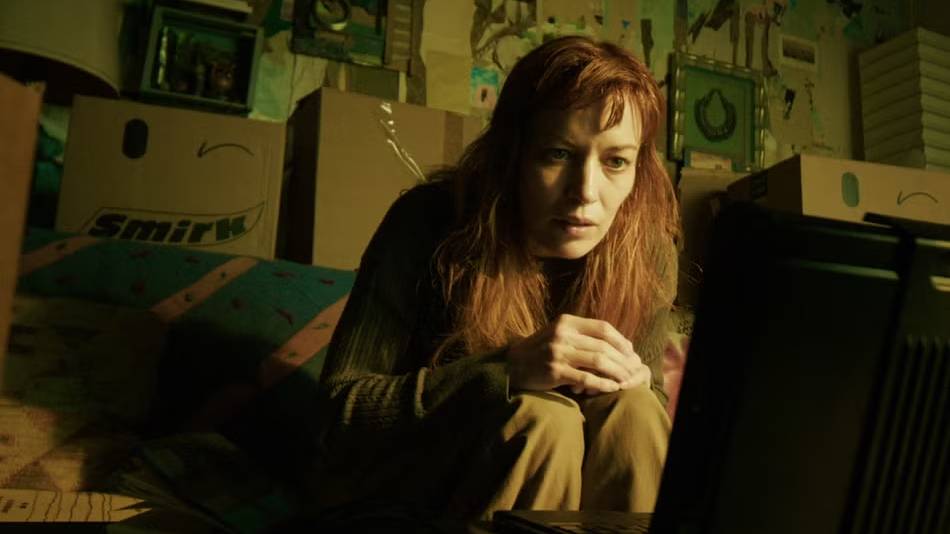
In today's digital age, there is a prevalent belief that our devices are constantly listening to us, tailoring advertisements based on our conversations. However, the reality is far more unsettling. Tech companies have bypassed the need for our consent to collect data, enabling them to track our every move, purchase, and even predict our behavior. Russell Goldman's debut film, "Sender," delves into this fear of surveillance and consumerism, highlighting how we are consumed by the false promise that material possessions can fill the void within us.
"Sender" is a gripping and anxiety-inducing watch that explores the cycle of supply and demand, addiction, and our complex relationship with technology. Through the character of Julia Day, played by Britt Lower, the film portrays a woman struggling with addiction and unemployment, finding solace in an e-commerce app called Smirk. As Julia's life spirals out of control, she is bombarded with mysterious packages that seem to know intimate details about her past, leading her on a quest to uncover the sender's identity.
As Julia's obsession with unboxing the mysterious packages grows, she descends into a state of disorientation and madness, mirroring the character falls seen in other psychological thrillers. Lower's performance as Julia is exceptional, capturing the character's descent into psychosis with raw intensity. The film's meticulous design, from the soundscapes to the cinematography, adds to the overall sense of unease and tension, making "Sender" a compelling and unsettling viewing experience.
"Sender" boldly suggests that losing oneself to consumerism is as perilous as losing oneself to self-destructive behaviors, hinting at the existential crisis that comes with an overreliance on material possessions. The film raises thought-provoking questions about identity, addiction, and the consequences of our obsession with consumption. In the end, "Sender" challenges viewers to confront the darker aspects of our digital age and the price we pay for our insatiable desire for more.
With its gripping narrative, stellar performances, and meticulous craftsmanship, "Sender" is a thought-provoking exploration of surveillance, consumerism, and the thin line between control and chaos. It is a film that lingers in the mind long after the credits roll, inviting viewers to reflect on the ways in which technology shapes our lives and identities. "Sender" is a package waiting to be unwrapped, revealing layers of complexity and intrigue that will leave audiences captivated and unsettled.