Maximizing the Benefits of AI: Creating New Work and Tasks for Human Skills
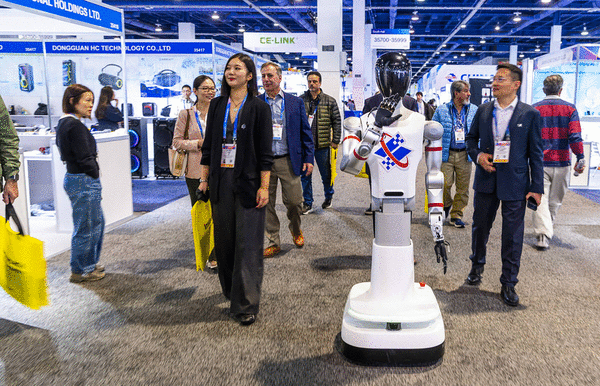
Artificial intelligence (AI) has the potential to bring about either great prosperity or widespread unemployment and societal upheaval. The impact of AI on the economy will largely depend on the choices made by humans. Economists are debating whether AI will complement or substitute for labor, which could have significant implications for the labor market and income inequality. Previous technological revolutions have shown that while automation displaces labor, it also creates new jobs and tasks that require human skills, ultimately benefiting the labor force.
Recent research has examined the emergence of new tasks and their impact on the labor market. The findings suggest that new work tends to be carried out by younger, well-educated workers and creates opportunities for specialization and skill development. This new work serves as a counterbalance to automation by expanding the set of tasks performed by labor and generating demand for human expertise.
There are concerns about the current deployment of AI and its potential to exacerbate the automation of jobs. The tax system in the U.S. favors automation over human labor, and there is a need to promote the creation of new tasks that require human skills. Public investment in research and development is crucial to fostering innovation and creating new job opportunities. Efforts to improve workers' mobility and reform education and training systems to adapt to AI technologies are essential for ensuring that AI benefits the broader population.
The key to maximizing the benefits of AI lies in creating new work and tasks that leverage human skills alongside AI technologies. Businesses and policymakers need to focus on using AI to enhance productivity and improve products and services rather than solely reducing labor costs. By promoting the development of new tasks and skills, AI can contribute to economic growth and prosperity.