Artemis II Mission: Astronauts Prepare for Re-Entry and Splashdown After Historic Lunar Loop
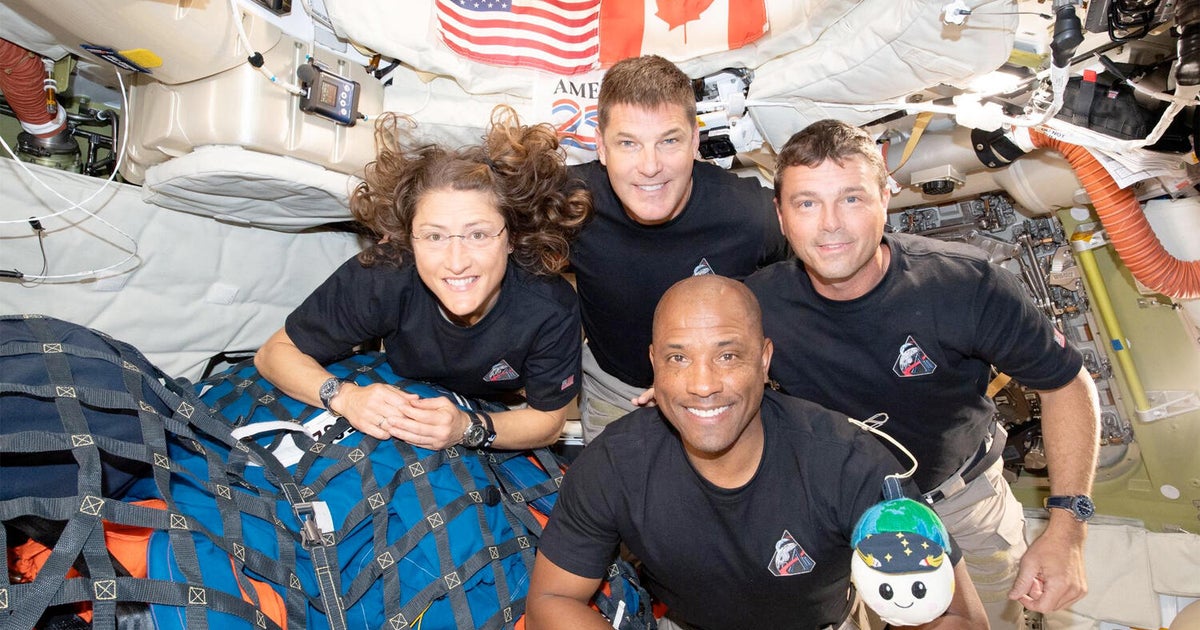
After completing a historic loop around the moon, the Artemis II astronauts had a relatively light day in space on Wednesday. They conducted final tests before preparing for re-entry and splashdown on Friday. The crew, consisting of Reid Wiseman, Victor Glover, Christina Koch, and Canadian astronaut Jeremy Hansen, held a news conference to discuss their flight, marking the first piloted trip around the moon in over 50 years. They also practiced manually piloting their Orion capsule to test their maneuvering skills.
The astronauts demonstrated precise control of the spacecraft in response to pilot inputs during previous tests, which could be crucial for future dockings with lunar landers. Flight controllers reviewed the re-entry timeline, and Navy recovery crews were dispatched to the splashdown site off the Southern California coast near San Diego, where the Orion capsule is expected to land on Sunday at 8:07 p.m. ET. Meanwhile, scientists at the Johnson Space Center in Houston analyzed the photographs, videos, and audio recordings captured by the astronauts during their journey over the moon's far side on Monday.
Unlike previous Apollo missions, which flew over the moon's far side in shadow, the Artemis II astronauts had the unique opportunity to observe large areas of the far side in daylight. This experience provided valuable insights into the moon's evolution, contributing to a better understanding of its geological processes. Despite a few minor anomalies, such as issues with the ship's toilet system, NASA's first piloted moon mission since 1972 has proceeded smoothly, showcasing the technical expertise required for safe lunar exploration.
In conclusion, the Artemis II mission has been a remarkable achievement, with the astronauts successfully completing a loop around the moon and gathering valuable data for future lunar exploration. The crew's ability to manually pilot the spacecraft and their observations of the moon's far side have added to our understanding of Earth's celestial neighbor. As the mission approaches its final stages with re-entry and splashdown, NASA continues to demonstrate its commitment to advancing human space exploration.