Exploring the Science of 'Project Hail Mary': Fact or Fiction?
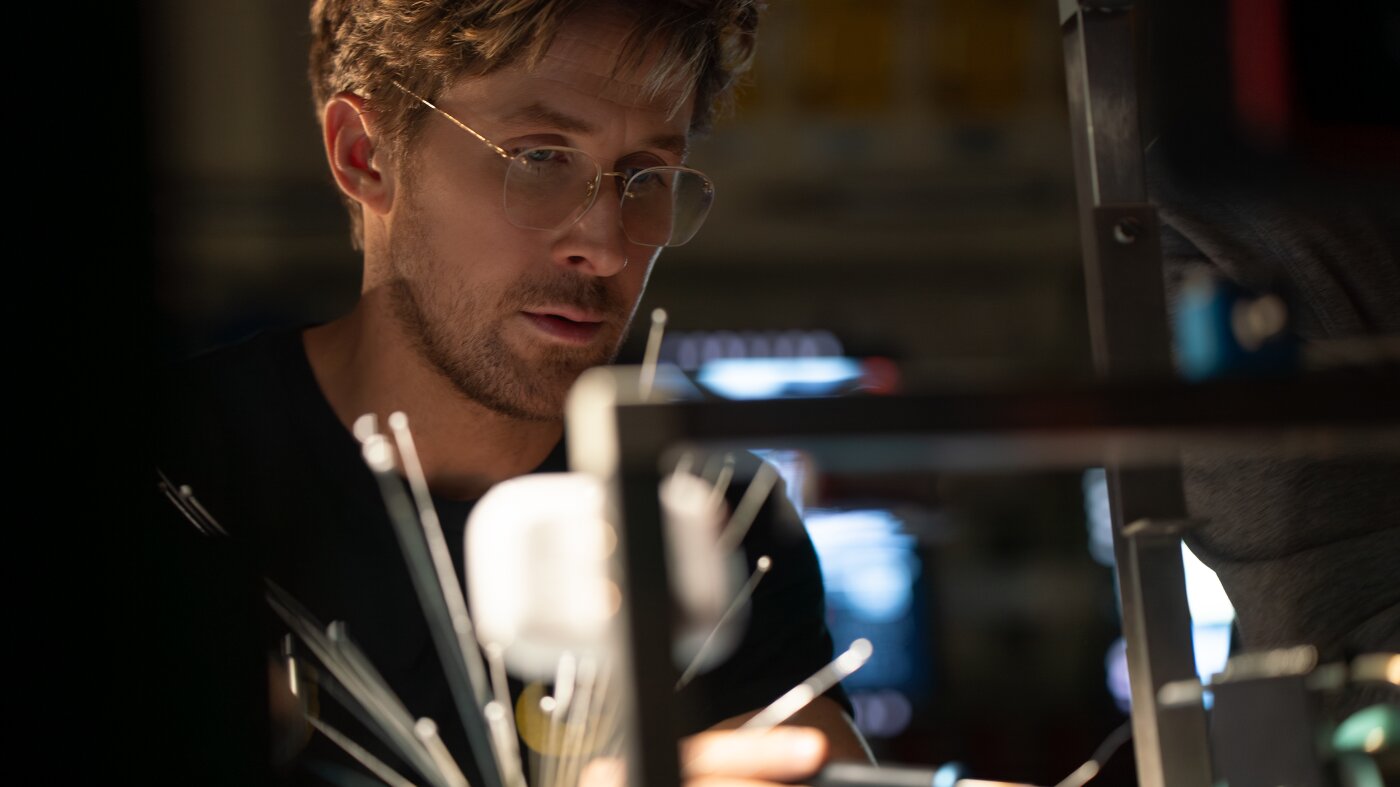
The movie "Project Hail Mary" has been a massive success, grossing over $400 million worldwide and sparking early Oscar buzz. The film's exploration of interstellar travel and alien life has reignited interest in science fiction and brought scientific wonder to the forefront of people's minds. But how much of the science in the movie is actually feasible?
The protagonist, Ryland Grace, a middle school teacher turned cell biologist, embarks on a mission to save Earth from a cosmic microbe threatening the sun. The star system he travels to, Tau Ceti, is a real star located 11.9 light years away with potential planets orbiting it. While human travel to such distant stars is currently impossible, advancements in technology may make it a reality in the future.
NASA experts discuss the challenges of astronaut health during long space missions. Medical solutions, such as induced comas or hibernation, may be necessary for deep-space travel. However, the long-term effects of induced comas on muscle mass, cognitive function, and overall health are still largely unknown.
The film portrays Ryland Grace spending four years in an induced coma, only to wake up and resume physical activities almost immediately. In reality, extended comas can lead to severe muscle wasting, cognitive impairment, and other health complications that would require extensive rehabilitation.
The risks of radiation exposure in space, as depicted in the movie, are a real concern for astronauts. NASA closely monitors space weather and provides shielding to protect astronauts from harmful radiation during missions. The film's portrayal of an alien civilization unaware of radiation risks is deemed unlikely by NASA experts.
The selective breeding of a microbe predator in the movie raises questions about the feasibility of such genetic manipulation in a short time frame. While breeding microbes for specific traits is possible, the process is complex and unpredictable, depending on the microbe's genetic makeup and the desired characteristics.
Artificial gravity, achieved through centrifuges, is not essential for conducting experiments in space, but it may benefit astronaut health during long-duration missions. NASA has explored the idea of incorporating centrifuges into spacecraft to mitigate bone and muscle loss in microgravity environments.
The communication between Ryland Grace and the alien creature, Rocky, in the film touches on the field of xenolinguistics, which studies how humans and extraterrestrials might communicate. While the movie simplifies the process of establishing communication, real-life efforts to decipher nonhuman speech would be more complex and time-consuming.
Overall, "Project Hail Mary" offers a captivating blend of science fiction and scientific plausibility, sparking discussions about the potential realities of interstellar travel and extraterrestrial encounters. The film's exploration of space exploration and alien life challenges viewers to consider the possibilities and limitations of scientific discovery.