Assessing America's Munitions Stockpile: Challenges and Strategies for Military Readiness
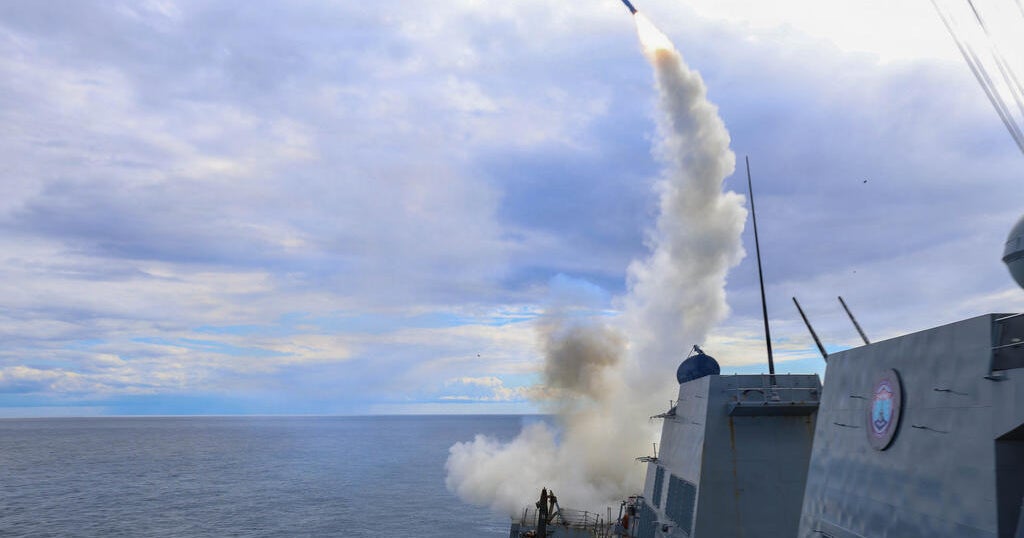
Following the recent military campaign against Iran, President Trump expressed confidence in America's military capabilities, stating that the country had an abundant supply of key munitions to sustain wars indefinitely. However, a closer look at the U.S. arsenal reveals a more limited reality, with concerns about advanced long-range missiles and interceptor munitions. Despite the ceasefire extension with Iran, questions remain about long-term supply availability, as highlighted by the Center for Strategic and International Studies' analysis of munitions stocks.
Admiral Samuel Paparo, testifying before the Senate Armed Services Committee, emphasized the time it would take to scale up production of high-end systems like the Tomahawk cruise missile. While the U.S. possesses exceptional capabilities, the capacity to replace these weapons is constrained. The strain on stockpiles of key munitions is evident as the U.S. supports operations in multiple regions simultaneously, leading to difficult trade-offs and challenges in production.
The Pentagon aims to address these concerns by increasing production of critical systems like the Terminal High Altitude Air Defense (THAAD) and offensive Precision Strike Missiles. The recent agreements with defense contractors and the proposed budget increase for missile procurement reflect efforts to bolster the country's military readiness. However, the timeline for rebuilding stockpiles to prewar levels could span several years, as noted by the CSIS report.
As the U.S. navigates evolving global security challenges, the need to maintain a robust supply of advanced munitions remains a priority. The ongoing efforts to enhance production capacity and incentivize industry investments underscore the commitment to ensuring the nation's defense capabilities. With continued focus on strengthening the defense industrial base and innovation, the U.S. aims to address the complexities of modern warfare and maintain a strategic advantage in an ever-changing geopolitical landscape.