May Day Mobilization: Communist and Democratic Party Affiliates Organize Nationwide Protests
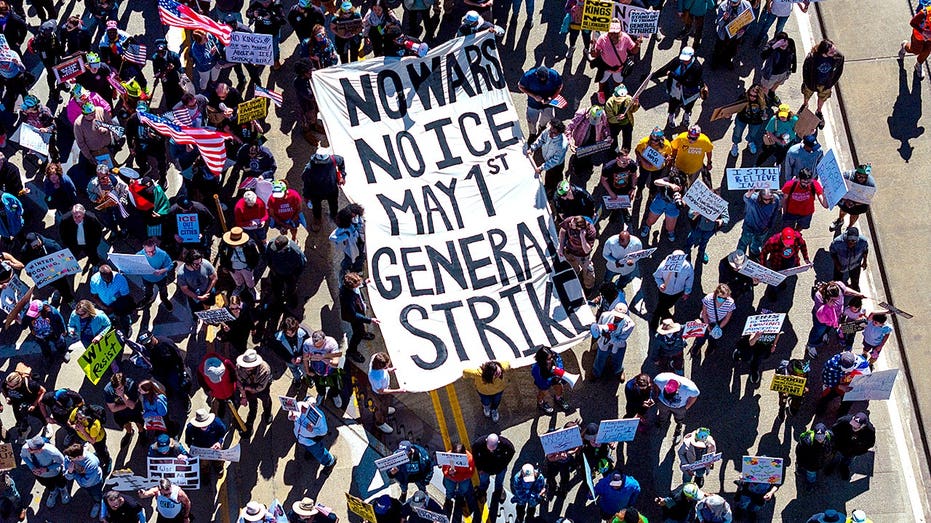
Today, various groups, including communist and Democratic Party affiliates, are organizing nationwide demonstrations for May Day, a significant day for socialism. These groups, with a combined annual revenue of around $2 billion, are coordinating over 3,000 protests and events to push what critics view as an anti-American agenda, urging people to boycott work, school, and shopping.
The May Day mobilization is spearheaded by a network of communist, socialist, and far-left organizations, prominently led by chapters of the Democratic Socialists of America and other groups like the People’s Forum, the Party for Socialism and Liberation, ANSWER Coalition, and Code Pink. These groups are financially supported by an American tech tycoon, Neville Roy Singham, based in Shanghai, who promotes the Chinese Communist Party's propaganda.
Various communist groups, such as the Communist Party of the USA and the Revolutionary Communist Party, are calling for actions to dismantle the capitalist-imperialist system and rise against the current administration. The involvement of these groups has raised concerns about the alignment of pro-communist and pro-socialist networks with traditionally blue Democratic Party organizations, including nonprofits like Indivisible, MoveOn.org, and the American Federation of Teachers.
The California Democratic Party, through the Mobilize.us platform, is promoting "Workers over Billionaires May Day rally" protests across the state, emphasizing their large membership base. Similarly, Democratic Party affiliates in Ohio, North Carolina, Wisconsin, and Yuba County are actively organizing under the coalition "May Day Strong" to support the national protest campaign.
Local chapters of the Party for Socialism and Liberation are engaging in "Art Build" projects in various cities to create signs for the May Day protests, reflecting the growing collaboration between mainstream Democrats and extremist socialist groups. This alignment has caused concern among Democratic strategists, who believe that the party is losing its center by associating with fringe elements pushing failed socialist agendas.
The May Day network, comprising communist, socialist, and Democratic Party affiliates, highlights the convergence of ideological coalitions within Democratic-aligned organizing. This alliance, known as the "red-blue" alliance, brings together various groups, labor unions, immigration advocates, and climate organizations to advance a radical political agenda under the guise of worker solidarity.
The coordination of the "May Day Strong" coalition, with over 3,000 events planned nationwide, underscores the collective effort to mobilize workers and students under the theme "Workers Over Billionaires." The core demands of the coalition include taxing the rich, opposing ICE and war, and expanding democracy while challenging corporate power.
The growing overlap between Democratic Party activists and socialist groups poses a challenge within Democratic politics, as mainstream Democrats increasingly align with influencers echoing anti-American rhetoric and propaganda narratives promoted by U.S. adversaries like China. The involvement of groups like Indivisible, funded by George Soros, in organizing May Day events reflects the shared ecosystem of anti-Trump rhetoric within the professional protest infrastructure.
The alliance with socialists has raised concerns among political analysts in the Democratic center, who view it as a misguided attempt to win over working people. They argue that the Democratic Party's shift towards socialist slogans and disruption tactics instead of policy and leadership could alienate working families and turn the party into a protest movement, ultimately leading to electoral losses.
Despite criticism, the Party for Socialism and Liberation's chapter in North Carolina is reminding members to join the May Day protests, emphasizing unity in numbers. The ongoing alliance between Democratic Party affiliates and socialist groups continues to shape the political landscape, raising questions about the party's direction and electoral prospects.