The Goldrich Cultural Center: A Beacon of Hope and Education in LA
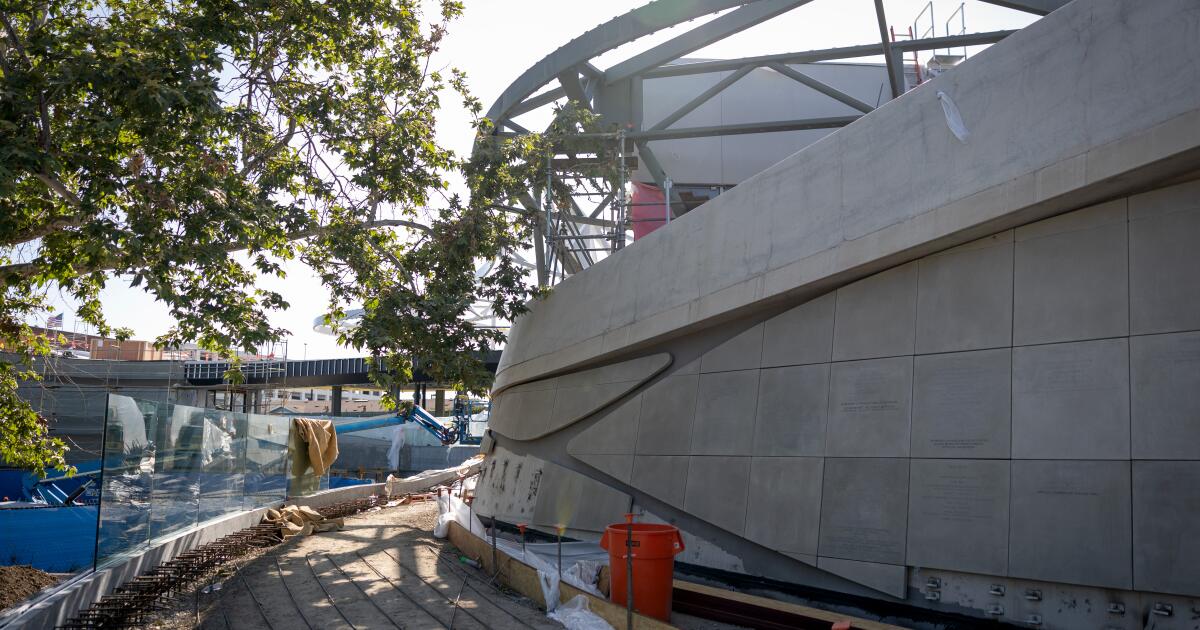
The Holocaust Museum LA, the oldest Holocaust museum in the United States, is set to reopen after a 10-month closure as part of the new Goldrich Cultural Center. The $70-million campus expansion, located in Pan Pacific Park, will double the museum's original footprint and offer a wide range of events and educational programs. The Goldrich aims to be a beacon of hope, understanding, and opportunity, with a focus on Holocaust education and fighting hate. Admission on opening day is free for all visitors and always complimentary for students.
The Goldrich Cultural Center features a modern architectural design with three pavilions connected by an open canopy. The center includes an exhibition gallery, a 200-seat theater, a rooftop garden, a reflective garden, classroom spaces, an open-air performance plaza, and a pavilion housing a Holocaust-era boxcar. The museum's founders, a group of Jewish Holocaust survivors, established the museum in 1961 to memorialize the victims of Nazi atrocities, with a particular emphasis on the 6 million Jews who perished in the Holocaust.
The Goldrich will open with an exhibition titled "Meet Your Neighbor," showcasing diverse L.A. communities and stories of Angelenos and their ancestors who sought refuge from persecution. The museum's main exhibition gallery space, which stretches over a storm water basin in Pan Pacific Park, will feature a groundbreaking exhibit titled "The Beautiful Game: The Untold Story," exploring the intersection of soccer, Jews, and the Holocaust. The Goldrich also offers educational programs, including a 60-seat theater with USC Shoah Foundation's Dimensions in Testimony technology.
The decision to build the Goldrich Cultural Center was made in response to rising anti-Jewish bigotry and the need to expand the museum's capacity to educate younger generations about the Holocaust. The new center was made possible by the vision of Jona Goldrich, a Jewish Holocaust survivor and philanthropist, who negotiated the land lease with the city to include additional parcels in the park. The Goldrich aims to create spaces that engage younger students and transform them from bystanders to upstanders in the face of hate and injustice.
The Boxcar Pavilion at the Goldrich houses a giant boxcar unearthed from the Majdanek concentration and death camp in Poland, offering visitors a powerful and emotional experience. The pavilion provides a space for reflection and dialogue, allowing visitors to engage with survivors and educators to deepen their understanding of the Holocaust. The Goldrich Cultural Center represents a commitment to preserving the memory of the Holocaust and educating future generations about the importance of combating hatred and intolerance.