Reviving American Shipbuilding: Challenges and Opportunities in the Industry
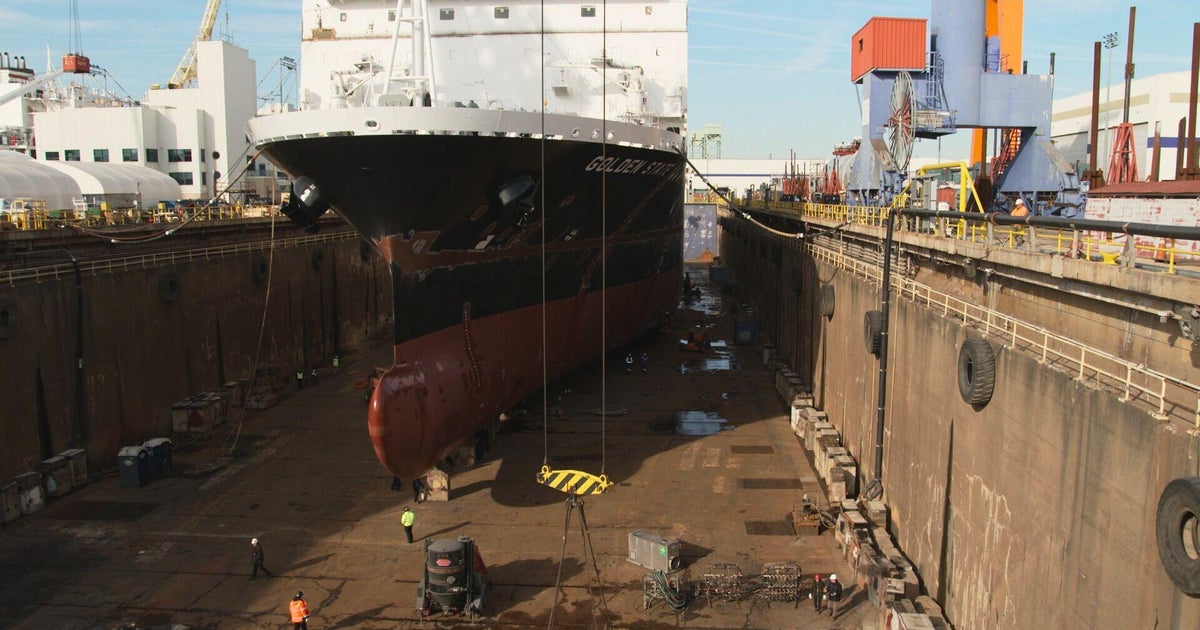
The ongoing conflict in Iran has brought attention to the critical role of ships, not just warships but also cargo vessels, especially those carrying oil or gas near the Strait of Hormuz. However, the state of American shipbuilding is in disarray due to years of neglect and shortsighted policies. The Philadelphia shipyard, one of the last two in the U.S. constructing large commercial cargo ships, has become a symbol of industrial decline. Hanwha, a South Korean shipbuilder, acquired the yard and aims to modernize it with a significant investment and plans to increase ship production to 20 ships a year.
The shortage of skilled labor in shipbuilding poses a challenge, as the work is demanding and requires specialized skills. Despite the harsh conditions, workers like Justin, Jeff, and Meg find the job fulfilling and appreciate the training and benefits provided by the shipyard. The outdated facilities and the need to import key components result in longer construction times and higher costs compared to shipyards in Korea or China.
Hanwha's top executive in the U.S., Michael Coulter, emphasizes the importance of scaling up production to reduce costs per ship significantly. He showcases the advanced technology and automation used in Hanwha's shipyard in Korea, where submarines and commercial vessels are built efficiently. Coulter also expresses the company's willingness to assist the U.S. in building submarines and LNG tankers, addressing the lack of American-made LNG ships due to regulatory challenges.
The Jones Act, a century-old law requiring cargo shipped between U.S. ports to be on American-made ships, presents obstacles to transporting LNG within the country. The high cost of building LNG ships in the U.S. compared to Asia hinders domestic production and distribution of natural gas. This results in regions like New England having to import natural gas from abroad, despite domestic reserves being available nearby.
President Trump's executive order aimed to address the shipbuilding crisis in the U.S., but conflicting policies, such as imposing tariffs on steel, have created challenges for the industry. The administration's stance on skilled immigration further complicates the situation, as skilled workers are essential for shipbuilding but face restrictions on work visas. Despite these obstacles, efforts are being made to revitalize American shipbuilding and strengthen national security through domestic production of ships and vessels.