Supreme Court Decisions: Guns, Transgender Athletes, and Culture Wars
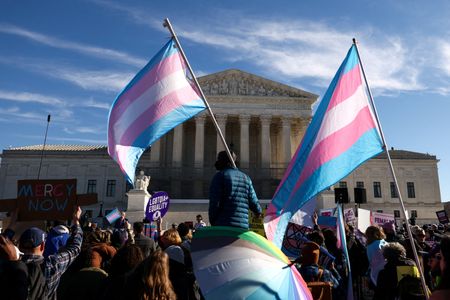
The Supreme Court's current term has been marked by high-profile disputes over President Donald Trump's policies on tariffs, immigration, and regulatory officials. However, the court is also set to rule on significant cases related to contentious U.S. "culture wars" topics such as guns and transgender athletes. With a conservative majority, the court has been shifting American law towards the right in recent years.
In two major cases, the court is expected to decide on challenges to a U.S. law prohibiting illegal drug users from owning guns and a Hawaii law restricting the carrying of handguns on private property open to the public without the owner's permission. Additionally, the court will rule on laws in Idaho and West Virginia banning transgender athletes from female sports teams, reflecting broader efforts to limit the rights of transgender individuals.
The court has taken a broad view of the Second Amendment in the context of gun rights, particularly in the Hawaii case, where conservative justices expressed skepticism towards the state's law. The court may further clarify its legal framework for analyzing firearms control laws based on a previous decision in the New York State Rifle & Pistol Association v. Bruen case.
Another case before the court involves the legality of a federal statute prohibiting "unlawful users" of controlled substances from possessing firearms or ammunition. The court appears to be questioning the provision while also considering its impact on other parts of the law, such as restrictions on felons possessing guns.
Regarding transgender athletes, the court is likely to uphold laws in Idaho and West Virginia that ban transgender individuals from participating in women's sports teams at public schools. Despite public opinion leaning against transgender athletes competing based on their gender identity, advocates hope for a ruling striking down these state laws.
In addition to these cases, the court is expected to rule on immigration policies, including Trump's efforts to restrict birthright citizenship and revoke Temporary Protected Status from Haitian and Syrian immigrants. The court is also considering a religious rights case involving a Rastafarian man's lawsuit against Louisiana prison officials for violating his religious beliefs.
As the Supreme Court concludes its term, these decisions will have significant implications for gun rights, transgender rights, immigration policy, and religious freedoms in the United States.