Unveiling the Mysteries of M-Class Planets in Star Trek: Trekspertise
Welcome to Trekspertise, a series that delves into the intricacies of the Star Trek universe, exploring the technology, history, details, and decisions that make it so captivating and enjoyable.
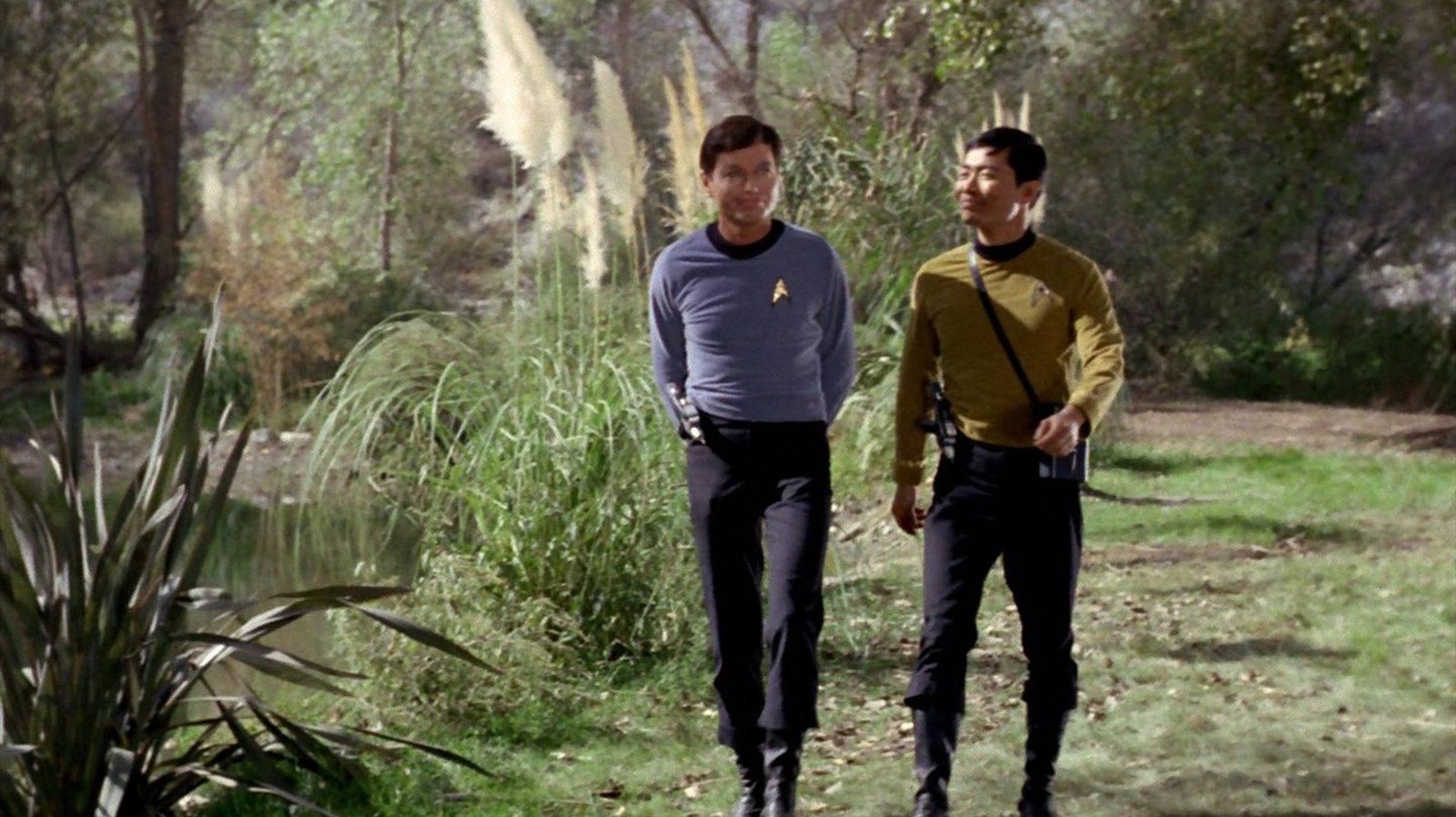
In the Star Trek series, when the USS Enterprise visits a new planet, crew members often provide detailed information about the planet's environment, including its flora, fauna, population, and atmospheric composition. Many of these planets have Earth-like atmospheres, allowing humans to walk around without the need for space suits, thanks to the familiar gaseous mix of nitrogen, oxygen, water vapor, argon, carbon dioxide, and other trace chemicals.
These habitable planets are classified as "M-Class planets" in the Star Trek universe, indicating that they can naturally support human life. This classification serves as a convenient storytelling device, enabling characters to explore diverse worlds without the constraints of spacesuit costumes and elaborate set designs.
While most Star Trek planets resemble Earth in terms of atmosphere and gravity, the introduction of "personal force fields" in Star Trek: The Animated Series expanded the possibilities for planetary exploration. However, M-Class planets remain the primary setting for the crew's adventures, offering a familiar backdrop for their encounters and missions.
In addition to M-Class planets, the Star Trek universe features a variety of planet types, each with its own unique characteristics and environmental conditions. From L-Class planets with vegetation but no animals to K-Class worlds that require artificial biospheres for habitation, the galaxy is filled with diverse planetary ecosystems waiting to be explored.
The concept of M-Class planets has evolved over the years, with the term "Minshara" introduced by the Vulcans in Star Trek: Enterprise to describe habitable worlds. This classification system adds depth to the Star Trek universe, highlighting the complexity and diversity of planetary environments encountered by Starfleet crews.
While the Star Trek franchise has explored a wide range of planet classifications in ancillary texts, inconsistencies in these classifications have led to confusion among fans seeking a clear understanding of the galaxy's diverse ecosystems. Despite these discrepancies, the exploration of new worlds and the discovery of M-Class planets continue to be central themes in the Star Trek series, captivating audiences with the endless possibilities of space exploration.