Ultrasound Wristband Technology Enhances Humanoid Robot Dexterity
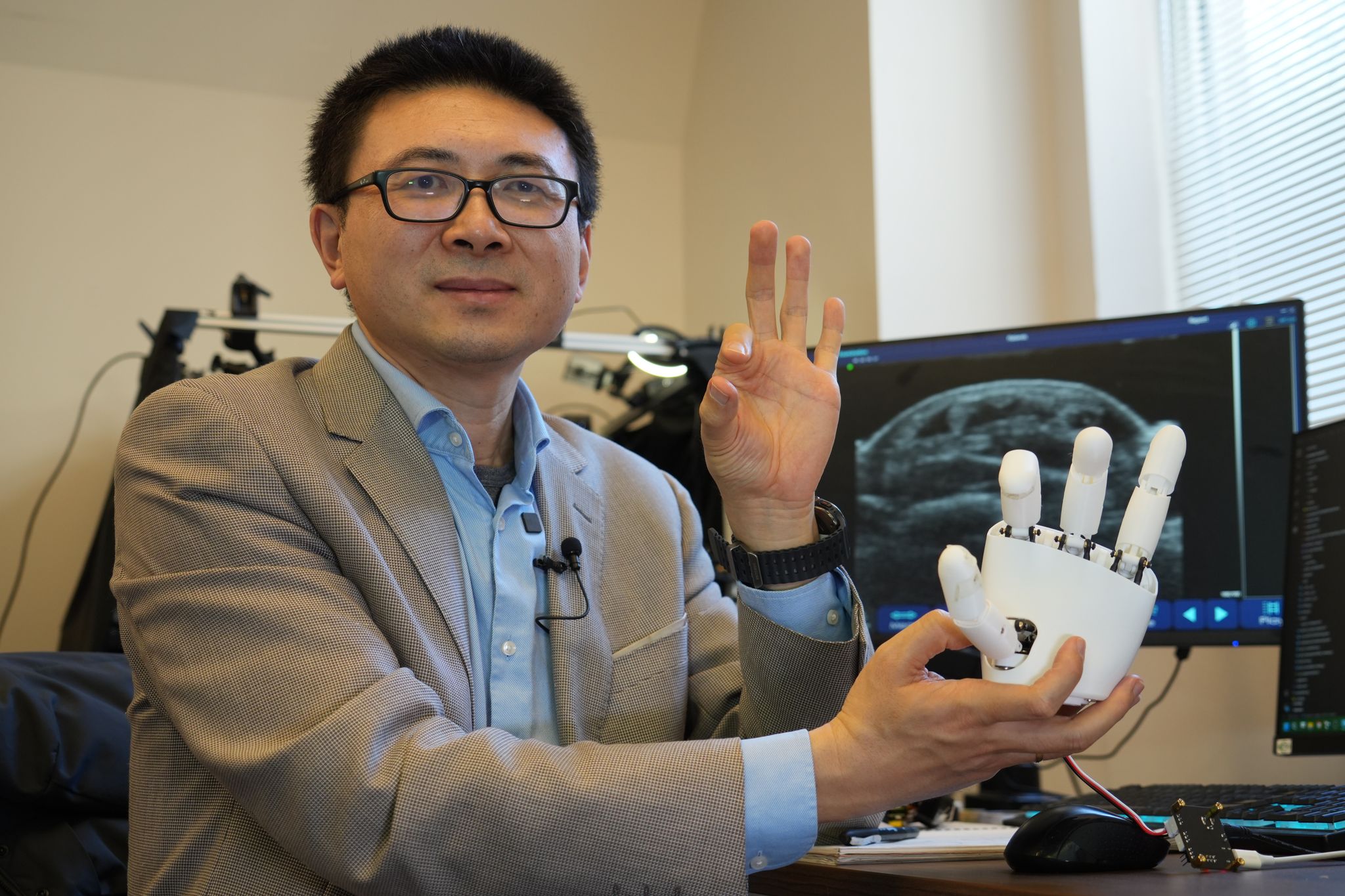
Researchers at the Massachusetts Institute of Technology have developed a new tool that uses an ultrasound wristband to capture human hand movements. This technology aims to help humanoid robots improve their dexterity in tasks like grasping objects. By collecting data on muscle, tendon, and ligament movements, the wristband can train robots to perform various tasks, such as housework and surgery.
The wristband works by using high-frequency sound waves to see through the wearer's skin and relay images of muscle and tendon movements to a computer. An AI algorithm then decodes these images into specific joint movements, known as degrees of freedom. This allows a robotic hand to mimic the gestures of the wearer with precision, including complex movements like those in American Sign Language.
In laboratory tests with volunteers, the wristband successfully mirrored hand gestures within 120 milliseconds. The technology can operate wirelessly, enabling remote control of robots without the need for the controlling person and the robot to be in the same room. This opens up possibilities for building large datasets of human motion to train robots in dexterous tasks without human intervention.
The development of this ultrasound wristband represents a significant advancement in the field of robotics and artificial intelligence. By incorporating sensory data from human movements, researchers are paving the way for robots to learn complex tasks and interact more effectively with the physical world. This innovative technology holds promise for a wide range of applications, from household chores to medical procedures, ultimately enhancing the capabilities of humanoid robots.