Indonesian Students Protest Against Government Spending: Demanding Accountability and Fiscal Responsibility
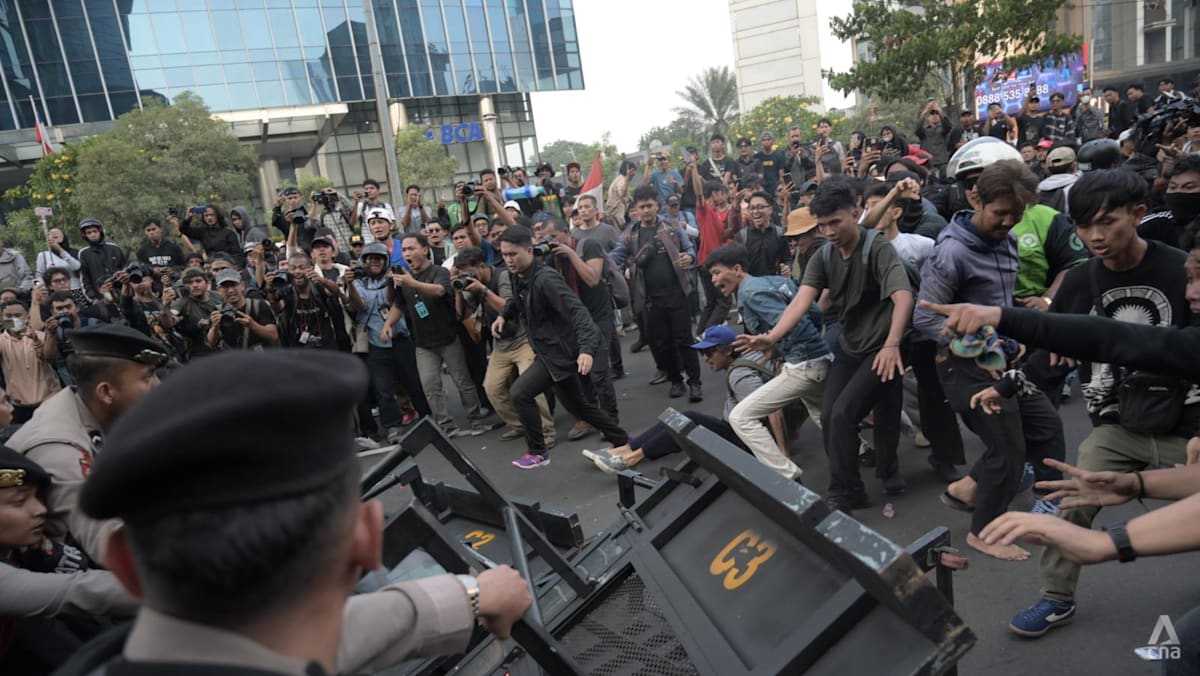
Hundreds of Indonesian students gathered in Jakarta to voice their discontent with President Prabowo Subianto's government's spending decisions, particularly the recent increase in gasoline prices. The protest, titled "Heading to Bankrupt Indonesia," saw university students marching towards central Jakarta's Bundaran HI landmark, with some facing obstacles from police and military personnel. The government's decision to raise gasoline prices came after global oil price spikes due to the Iran conflict, putting pressure on the budget burdened by Prabowo's spending plans.
The students displayed posters with messages like "Cancel the fuel price hike" and "Wall of Shame" targeting Prabowo's Cabinet. Student leader Yatalathof Ma'shum Imawan outlined five demands, including halting the free-meals and village cooperatives programs, reducing fuel and staple food prices, and curbing wasteful spending. The protesters highlighted the adverse fiscal impact of the free meals program, leading to the withdrawal of subsidies and financial strain.
Criticism was also directed at Prabowo's expansion of military involvement in civilian affairs, raising concerns about a return to Indonesia's authoritarian past under former President Suharto. The protesters aimed to highlight the economic, democratic, and moral risks associated with the government's actions. Despite facing resistance from police and military personnel, the students persisted in their demonstration, resulting in scuffles as they tried to breach the barricades.
The free meals program, intended for 83 million children and pregnant women, has faced criticism for inefficiency, financial leakage, and health risks, with reports of food poisoning among children. The protesters emphasized the need for better governance and oversight to address these issues. The demonstration underscored the students' determination to hold the government accountable for its spending priorities and policies.
In conclusion, the protest in Jakarta reflects the growing discontent among Indonesian students over President Prabowo Subianto's government's spending decisions, particularly the recent fuel price hike. The students' demands for fiscal responsibility, lower prices, and an end to wasteful spending highlight their concerns about the country's economic and democratic future. The demonstration serves as a reminder of the importance of transparency and accountability in governance to address the challenges facing Indonesia.