Breaking Barriers: HBCUs and the NBA Draft Legacy
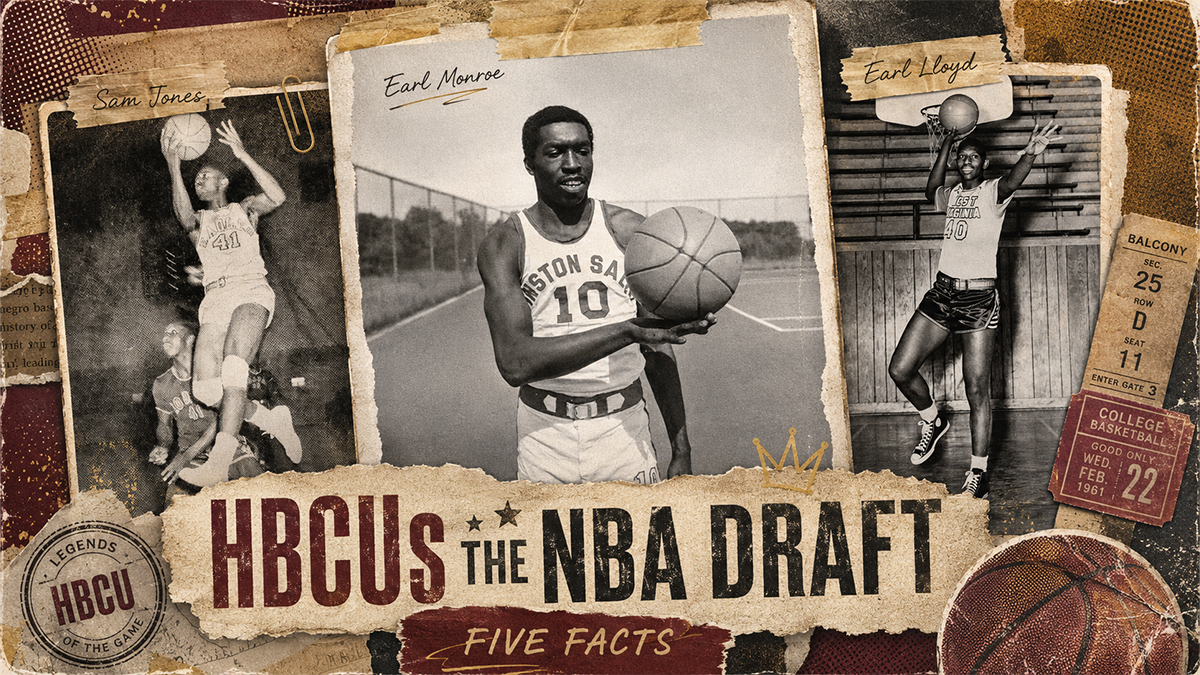
The NBA Draft has a strong historical connection to Historically Black Colleges and Universities (HBCUs), although this link has sometimes been overlooked in recent years. As the 2026 NBA Draft approaches, fans of HBCU basketball are eagerly anticipating the potential selection of Tennessee State standout Aaron Nkrumah, which could break a long-standing drought for HBCUs in the draft. HBCUs have a rich legacy of producing NBA champions, Hall of Famers, first-round picks, and trailblazers, highlighting the significant role of Black college basketball in the NBA pipeline.
One pivotal moment in the history of HBCUs and the NBA Draft occurred in 1950 when Earl Lloyd from West Virginia State became the first HBCU player to be selected in the draft by the Washington Capitols in the ninth round. Lloyd's groundbreaking achievement extended beyond the draft as he went on to become the first African-American player to compete in an NBA game, playing a crucial role in the integration of professional basketball.
Among the notable HBCU NBA Draft picks, Earl "The Pearl" Monroe from Winston-Salem State holds a prominent position. Monroe was chosen as the No. 2 overall pick by the Baltimore Bullets in 1967, a record that still stands as the highest selection of an HBCU player in the draft. His exceptional college basketball career at WSSU, where he led the Rams to the 1967 NCAA College Division national championship, solidified his legacy in the sport.
While hundreds of HBCU players have been part of the NBA Draft, only 21 have been selected in the first round. Notable names like Sam Jones, Dick Barnett, Zelmo Beaty, Purvis Short, Charles Oakley, Lindsey Hunter, and Carlos Rogers have left their mark as first-round picks. Sam Jones from North Carolina Central was the first HBCU player to be chosen in the first round in 1957, while Carlos Rogers from Tennessee State was the most recent HBCU first-rounder in 1994.
Tennessee State and Jackson State lead the pack in terms of producing NBA Draft picks, with both schools boasting 23 selections according to NCAA records. Grambling State closely follows with 22 draft picks, underscoring the historical strength of HBCU basketball programs. Schools like North Carolina A&T, Winston-Salem State, Southern, Norfolk State, Alabama State, Kentucky State, and Alcorn State have also contributed significantly to the draft history of HBCUs.
The most recent HBCU player to be drafted into the NBA was Kyle O'Quinn from Norfolk State, selected by the Orlando Magic in the second round of the 2012 draft. However, over a decade has passed since an HBCU player has been drafted, reflecting the evolving landscape of the draft process. With the draft format changing to two rounds in 1989, fewer opportunities have been available for HBCU players, leading many to pursue alternative paths to the NBA through avenues like the Summer League, training camp deals, two-way contracts, the G League, or overseas opportunities.
The significance of the 2026 NBA Draft for HBCUs goes beyond the potential selection of one player. It represents a pivotal moment in the ongoing narrative of HBCU basketball history, signaling the possibility of a new chapter being written on draft night. As fans eagerly await the draft, the spotlight shines on HBCU talent and the enduring legacy of these institutions in the realm of professional basketball.