Syria's Transitional Parliament: Shaping Democracy in a Post-Conflict Era
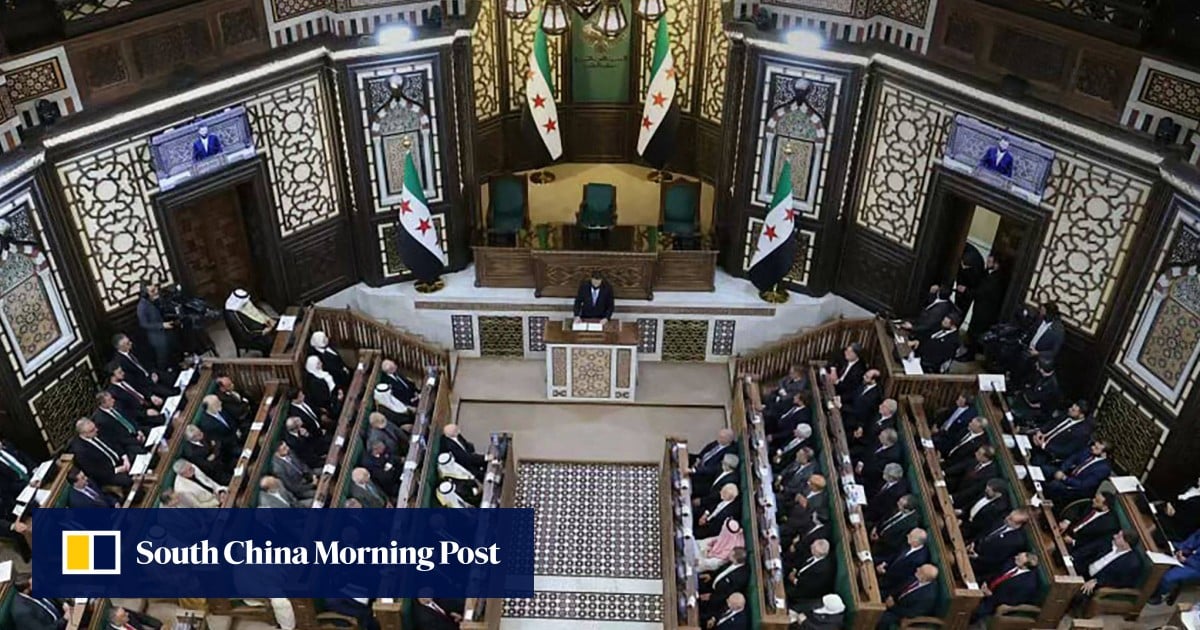
Syria's transitional parliament has commenced its inaugural session with the crucial mission of shaping the country's new constitution and paving the way for democracy following years of authoritarian rule and civil conflict. The previous rubber-stamp legislature was dissolved after the ousting of Bashar al-Assad in December 2024, and a temporary constitutional declaration was put in place for a five-year transition period.
The selection of the 210 members of the new parliament has been a contentious process, with local committees appointed by the electoral commission, which was in turn appointed by President Ahmed al-Sharaa, choosing two-thirds of the members. President Sharaa will appoint the remaining 70 members this week. The session began with 206 members present, excluding Sweida province and a deceased member, with Sweida yet to designate its representatives following sectarian violence last year.
The selection process took place in former Kurdish-controlled regions in the north and northeast earlier this year, after the central authorities regained control and reached an agreement on integrating Kurdish institutions into the state. The newly sworn-in representatives are expected to elect the assembly's leadership later in the session. President Sharaa emphasized the importance of responsibility, competence, dialogue, the rule of law, and respect for institutions in his opening address, highlighting the significance of this transitional period in Syria's history.
Over the course of its 30-month mandate, the parliament faces significant challenges in drafting the constitution, approving the budget, and proposing and amending laws. Analysts point to the importance of ensuring the independence of the legislature and the separation of powers in this critical phase of Syria's transition towards democracy. The parliament's work will play a pivotal role in shaping the future of the country as it navigates the complexities of post-conflict governance and institution-building.