Unveiling the Legacy of Sak Tahn Waax: A Maya Mathematician's Discovery
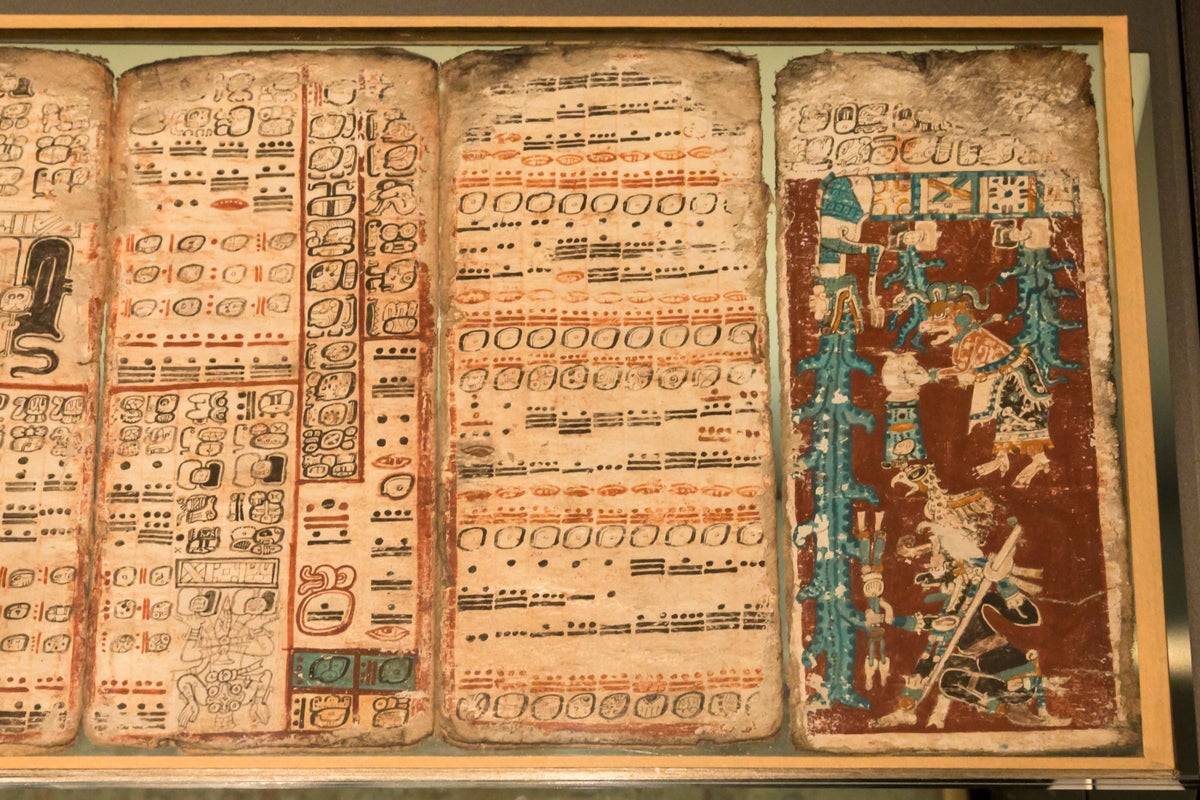
A new discovery in the world of mathematics has shed light on the identity of a Maya mathematician known as Sak Tahn Waax, or “White-Chested Fox.” This ancient mathematician left his mark on a 1,000-year-old chamber found in present-day Guatemala. The Maya civilization was known for its advanced mathematical knowledge, particularly in the realm of astronomy, as evidenced by their intricate calendars. Despite the destruction of much Indigenous knowledge during the European conquest of the Americas, the name of Sak Tahn Waax has now been revealed through the deciphering of hieroglyphs found in the chamber.
Archaeologists uncovered a mysterious scrap of plaster dating back over 1,100 years, which contained symbols representing a mathematical formula related to celestial bodies' motions in the sky. Alongside the formula were hieroglyphs that translated to “so says Sak Tahn Waax,” marking the first identification of a Mesoamerican mathematician by name. The discovery was made during excavations at the Xultun site in Guatemala, where a team unearthed a chamber with mural-covered walls that contained the inscriptions.
The deciphering of the plaster scraps was a challenging task that took over a decade to complete. The markings on the scraps were initially perceived as numbers and dates, but further analysis revealed a complex celestial chronology that calculated the planetary cycles relative to the sun. The mathematical formula found in the chamber showcased the author's expertise in combining scientific observations with significant numbers and dates in Maya culture. This unique text has provided valuable insights into the mathematical prowess of Sak Tahn Waax and his contributions to Maya knowledge.
The discovery of Sak Tahn Waax's signature formula has opened up new avenues for research into the ancient Maya civilization. The chamber at the Xultun site is believed to have belonged to an artisan family or guild of scribes, raising questions about the mathematician's connection to the location. Further studies of the plaster scraps and excavations at the site may reveal more about Sak Tahn Waax and his role in Maya society. The identification of this ancient mathematician has added a personal dimension to the mathematical achievements of the Maya civilization, highlighting the importance of preserving and understanding Indigenous knowledge.
In conclusion, the revelation of Sak Tahn Waax's identity as a Maya mathematician has provided a glimpse into the sophisticated mathematical practices of the ancient civilization. The discovery of his signature formula in the 1,000-year-old chamber at the Xultun site marks a significant milestone in the study of Mesoamerican mathematics and astronomy. As researchers continue to unravel the mysteries of the Maya civilization, the legacy of Sak Tahn Waax and his mathematical genius will undoubtedly play a crucial role in shaping our understanding of ancient Indigenous knowledge.